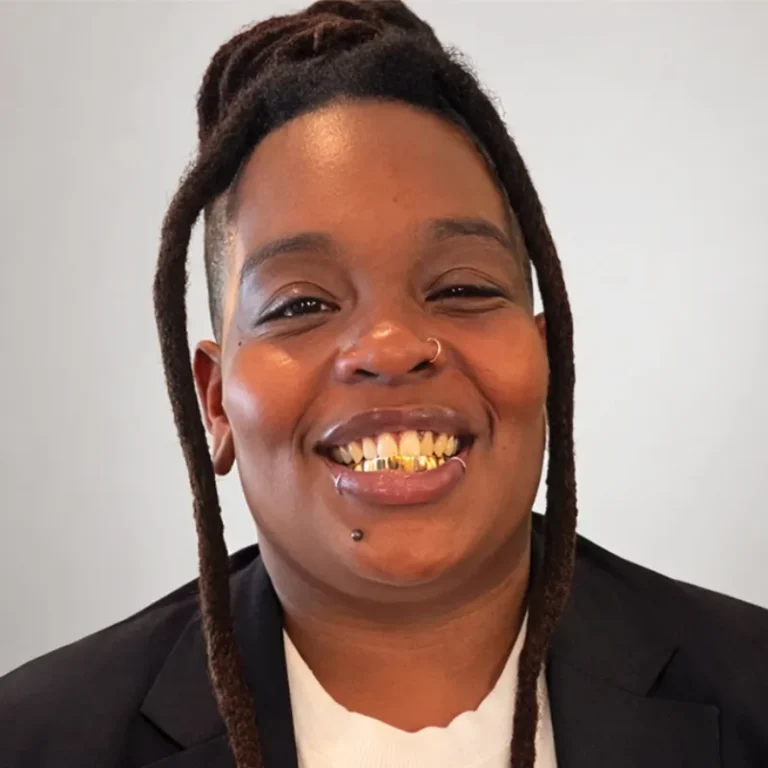

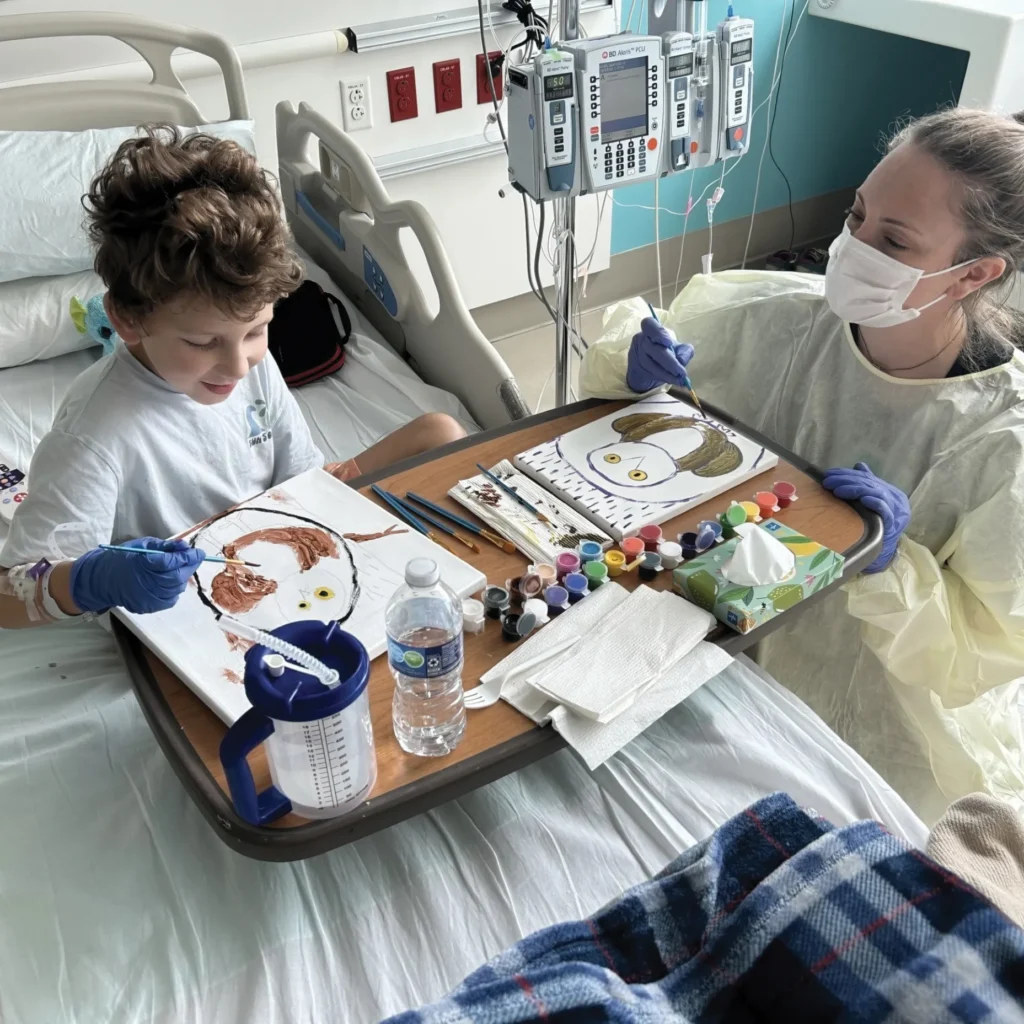
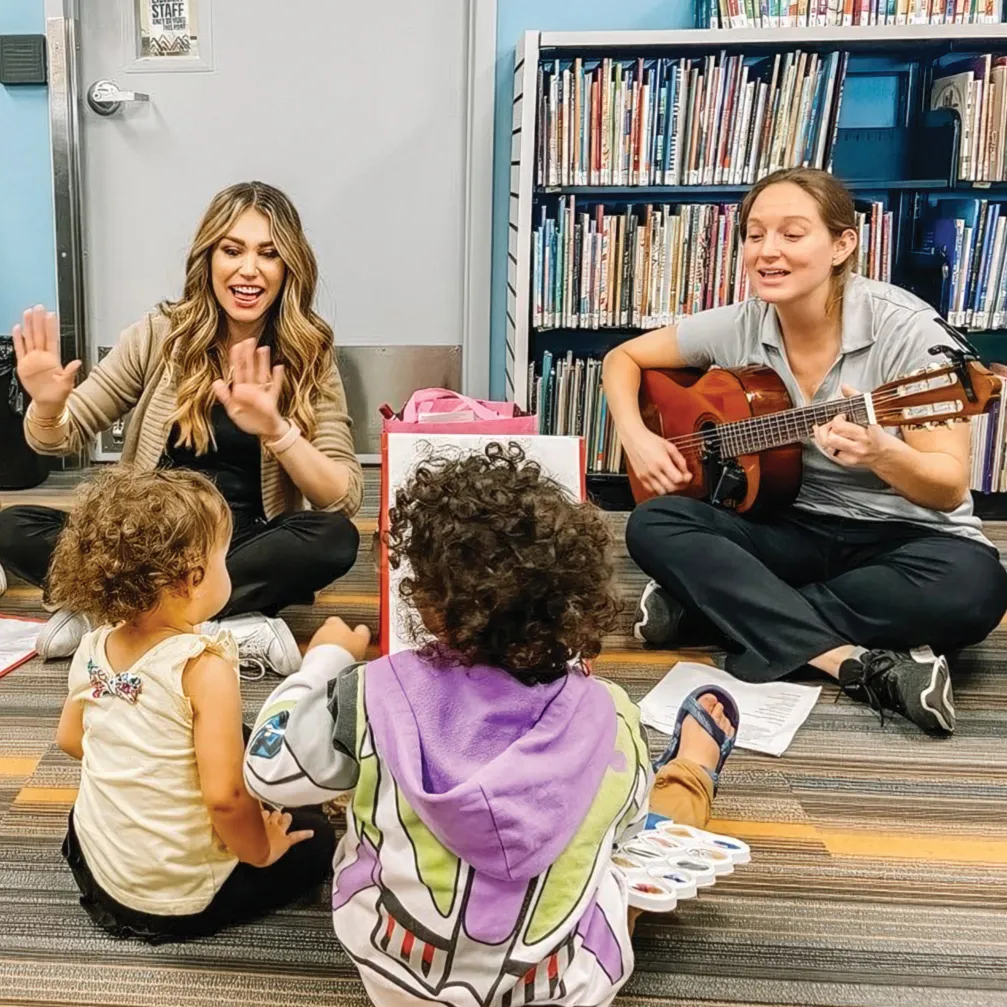
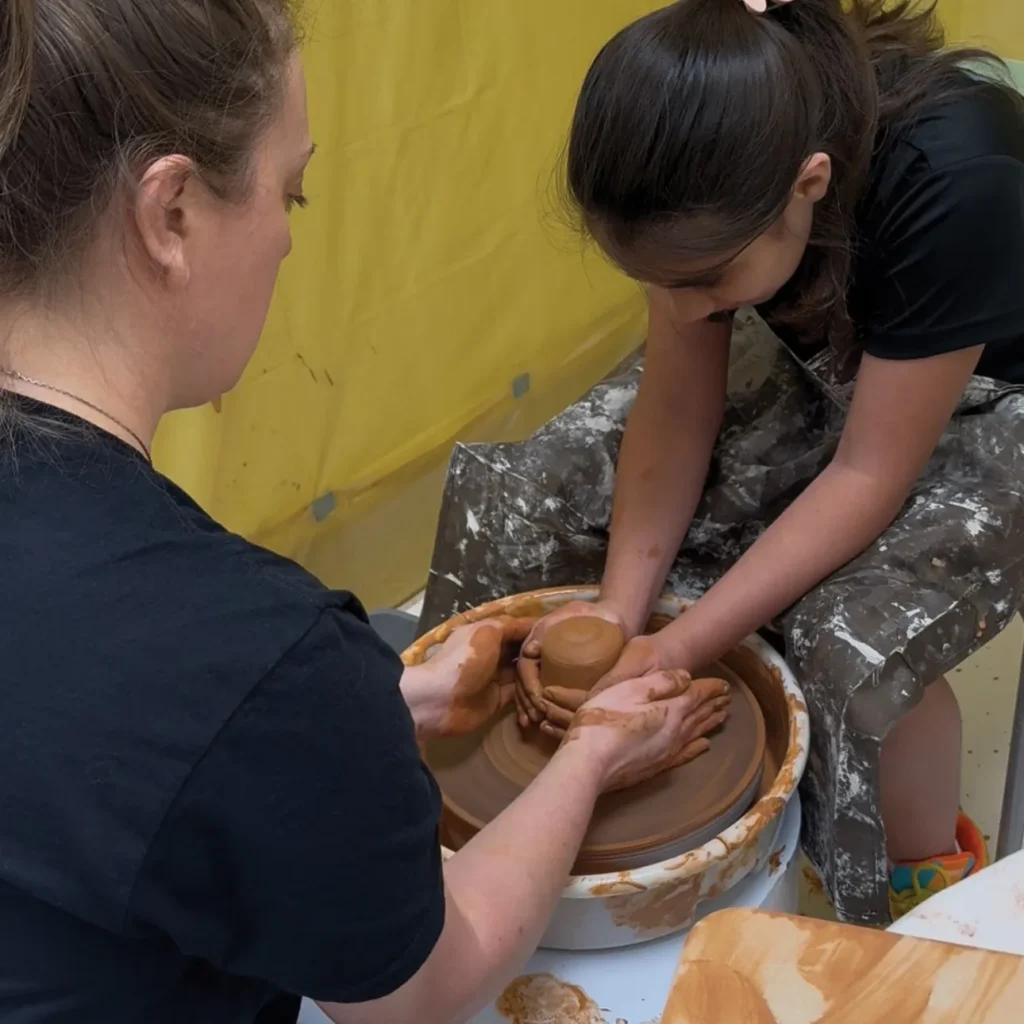
Kelly Burns, a licensed mental health counselor and board-certified art therapist who specializes in trauma-informed care, expressive arts and integrative wellness, leads Nemours Children’s Hospital’s Creative Arts Therapy (CAT) program. The program works with patients, art volunteers and community partners to offer those receiving medical care everything from collage and painting to music and pottery making. | Courtesy Nemours Children’s Hospital, Florida
Five years after its opening in 2012, Nemours Children’s Hospital, Florida—located in Lake Nona’s 650-acre Medical City—began to integrate music therapy into the cycle of care through a part-time therapist.
A wise decision indeed. Music therapy helped patients improve communication, maintain a positive outlook and feel a sense of control. It also enhanced engagement and decreased pain and anxiety. A year later, the program was made full time.
In 2022, the pediatric acute-care hospital added an art therapy modality, and the Creative Arts Therapy—or CAT—program was born. CAT expanded a year later with dedicated studio space, which meant that sessions were no longer limited to a patient’s bedside or to public spaces.
Since 2024, the two- to three-person CAT team has provided individual art and music therapy to an average of 2,500 patients each year. That’s not including groups served through collaborative events that the team has hosted with community partners.
CAT supports children, adolescents and families across the pediatric hospital’s inpatient units with outpatient services to “promote emotional healing through evidence-based health services utilizing art and music therapies.”
Clearly, the power of art and music to help in healing young hospital patients is strong. A 2023 Journal of Research in Medical Sciences review of 17 studies that evaluated art therapy intervention on children under age 18 who had been diagnosed with cancer confirmed its many physical and emotional benefits.
Kelly Burns, a licensed mental health counselor and board-certified art therapist who specializes in trauma-informed care, expressive arts and integrative wellness, developed and leads the hospital’s CAT program. Burns is joined by Caitlin Couch, a board-certified music therapist.
Patients begin their CAT journeys through referrals from their medical teams. Often, if patients are having difficulty coping during their stays—or if they have been confronted with a daunting new diagnosis and doctors think self-expression would help them to cope—they call for CAT.
“For example, those here for inpatient rehab usually have long stays,” says Burns. “So I work with the patient and with our art volunteers and community partners so the patient can explore everything from collage and painting to clay, pottery and music. It gives them something different to look forward to each time.”
Other areas in which the CAT team provides significant support is for babies in the Natal Intensive Care Unit and, at the opposite end of the spectrum, those transitioning to end-of-life care. Among the legacy-building interventions in those cases are recordings of patients’ heartbeats and favorite pieces of music for their families to cherish.
“We are a mighty team, but what makes us even more special is that the program is community funded and supported,” says Burns. The CAT program accepts donations of art and music supplies (the wish list is on amazon.com), welcomes event sponsorships and seeks partnerships with local civic groups and nonprofit organizations.
Partners include students at the University of Central Florida College of Medicine, also in Lake Nona, many of whom volunteer for CAT. Another partner, ArtReach Orlando, hosts monthly healing arts events for inpatients and outpatients.
CAT’s yearly programing schedule also includes events that involve those who work at the hospital. For example, during World Art Day, on April 15, physicians join kids in showcasing their art skills. Says Burns: “We try to find any reason to have an event with the kids that will help make their lives feel normal as much as possible.”
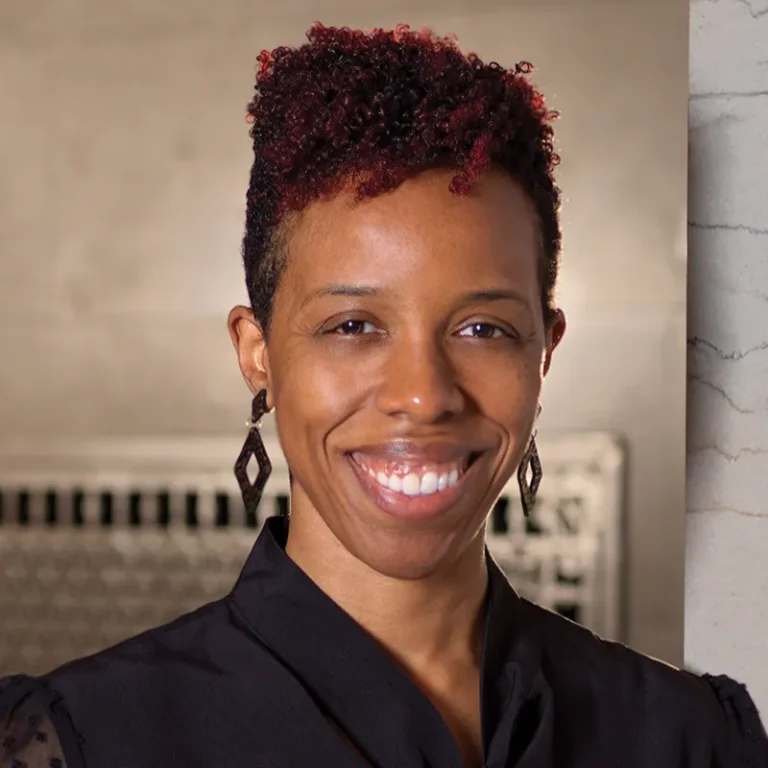
The vital role the CAT program plays in patient care does not go unnoticed by physicians. Dr. Dorothea Douglas Lindsay, a pediatric hematologist at Nemours, often calls upon the CAT team because she considers its role to be crucial for whole-patient care.
“Our patients don’t get better from medicine or procedures alone,” she says. “We know that when their minds, their hearts and their souls are treated, not only do they get better faster but the journey is also less traumatic.”
Of course, parents of children who receive CAT services witness the efficacy firsthand. Says one mother whose daughter went through intensive leukemia treatment at the Lake Nona hospital:
“During this very heavy treatment journey, art therapy became a safe and healing space for my daughter. It was one of the rare moments where she was not defined by IV lines, medications, or hospital rooms, but simply allowed to be a child again.”
The mother, whose name is not used for privacy reasons, says that CAT helped her daughter “cope, express feelings she couldn’t always put into words and reconnect with happiness during one of the most difficult periods of her life.”
Another mother whose four children have been patients at Nemours, with each receiving CAT services individually or as part of a group, says that the program “provides an essential and vital medium for the children to express big feelings that are too complex or frightening to verbalize.”
CAT services are free to patients. Visit nemours.org for more information about the program.