

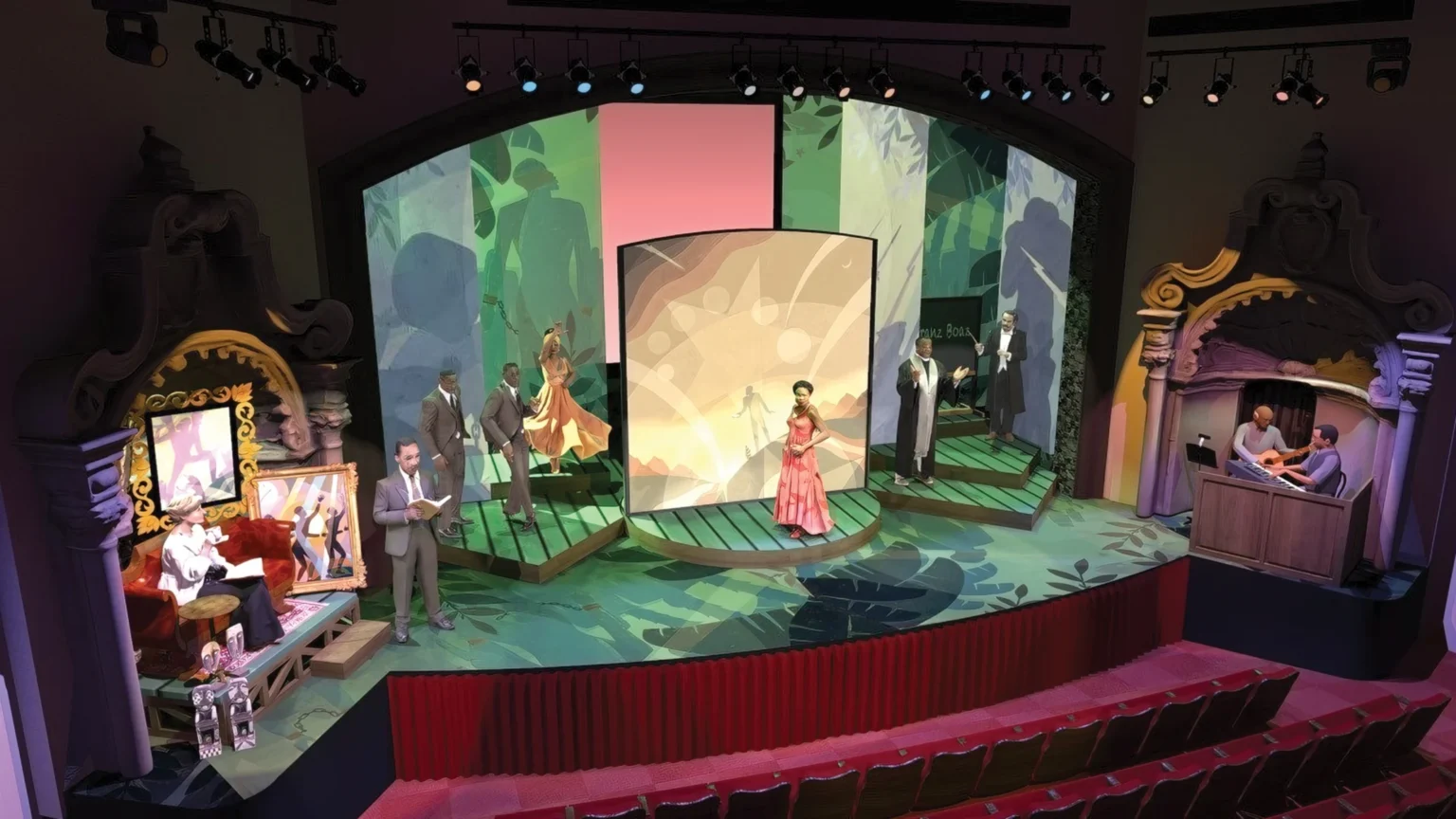
In the spring of 1932, Zora Neale Hurston—a central figure in the Harlem Renaissance who had been raised in nearby Eatonville—asked two of her mentors, both professors at Rollins College, if she could present a program that celebrated authentic “Negro folklore” song and dance at the college with an all-Black cast.
Her production, which consisted of material gathered largely during anthropological visits to juke joints and labor camps, was called From Sun to Sun. Edwin Osgood Grover, the whimsically titled professor of books, put Hurston in touch with Robert Wunsch, a young theater professor who loved the idea.
Wunsch pitched the proposal to President Hamilton Holt, a nationally prominent progressive and a founding member of the NAACP. But was From Sun to Sun simply a bridge too far in the era of Jim Crow, even for Holt? Well, as it turned out, yes and no.
The show was ultimately staged at Rollins, but—at the insistence of Holt—was relegated to the college’s Recreation Hall, not showcased at the prestigious Annie Russell Theatre, much to Hurston’s annoyance. And the only Black people allowed to attend were those who performed onstage.
“Tickets to the general public—except Negroes,” wrote a frustrated Hurston to a friend in New York. “I tried to have the space set aside but find that there I come up against solid rock.”
Now, more than 90 years later, the little-known backstory of From Sun to Sun and Rollins College will be revealed through Let the People Sing, a period play with rollicking music and movement that will run from November 13 to 16 for five performances. The venue, ironically, will be the once off-limits Annie Russell Theatre.
Let the People Sing is not a restaging of From Sun to Sun. Instead it is an original work, mostly by student playwrights, which tells the backstory of Hurston’s creative journey, her impulse to share her work with mixed-race audiences and, not incidentally, the state of race relations at the time in Winter Park.
A cautious Holt had instructed Wunsch to make sure that nothing in From Sun to Sun was “vulgar” and encouraged him not to advertise it to the broader community, where the very idea of such a production might have given offense. But perhaps he worried too much.
Local critics, in fact, praised an off-campus, invitation-only trial run at The Museum—a now-forgotten venue in Fern Park—that preceded by a week the show’s debut at the Recreation Hall.
Although even the kudos for From Sun to Sun sound cringeworthy today, reflecting as they do the paternalism of the era, audiences also enjoyed the on-campus production. A correspondent from the Winter Park Herald wrote:
“This Negro folk-lore gripped the audience with a sense of native rhythm and harmony which is hard to fully comprehend unless seen and felt. What the Negro has brought to America is too vital to be allowed to vanish from the Earth.”
The Sandspur, the campus newspaper, offered comparable praise, calling From Sun to Sun “one of the most effective productions given at the college this year” and lauded the work’s “unselfconscious spontaneity.” Hurston presented another show, All De Live Long Day, just two months later, also at the Recreation Hall.
Max Payton, one of the student playwrights of Let the People Sing and director of the show’s music, says the new work is “about a Black artist in a world made for white people; it’s about the spirit of the artist versus the spirit of the academic; it’s about censorship, ownership and expression—all topped with song and dance.”
Much of the original music in From Sun to Sun has been lost to time, so in several instances Payton has written songs in the style of the period and the genre for only piano and guitar—just as Hurston probably heard the songs she selected.
Los Angeles-based Elizabeth Bell-Haynes, guest director for Let the People Sing, adds that the show “is not a documentary or a biography; it’s a piece of the truth.”
Even if the college had wanted to revive From Sun to Sun, she notes, it would have been impossible since so much Black music was passed down from generation to generation without being written down, much less published.
Bell-Haynes has directed other plays with topical or socially conscious themes, including Vincent Terrell Durham’s searing drama The Fertile River, which tackled a 1950s eugenics study in North Carolina that focused upon African Americans.
Joining Bell-Haynes as a guest scenic designer is her husband, Ed Haynes, who was recently announced as the 2026 recipient of the award for Distinguished Achievement in Scenic Design and Technology from the United States Institute for Theatre Technology.
Choreography will be by Orlando-based Arius West, co-founder of MAC Boys Entertainment, whose mission is to “increase Black talent on stage and Black people in the audience.”
West has worked locally on numerous productions, including those at Orlando Family Stage and The Renaissance Theatre Co. Costumes will be designed by student Yasmine Hudson, also a co-writer, who last year performed in the college’s production of A Raisin in the Sun.
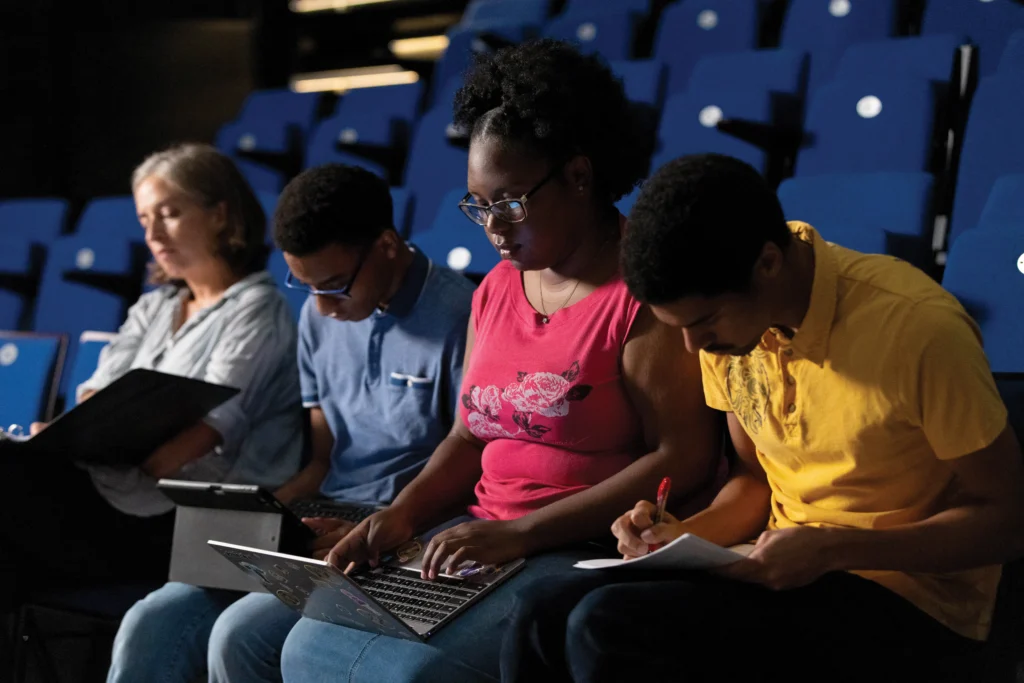
In addition to Payton, the writing team for Let the People Sing included students Conner Chaumley and Breyonna Crawford, with an assist from Marianne DiQuattro, an associate director of theater at the college and director of the historic venue known by locals as “The Annie.”
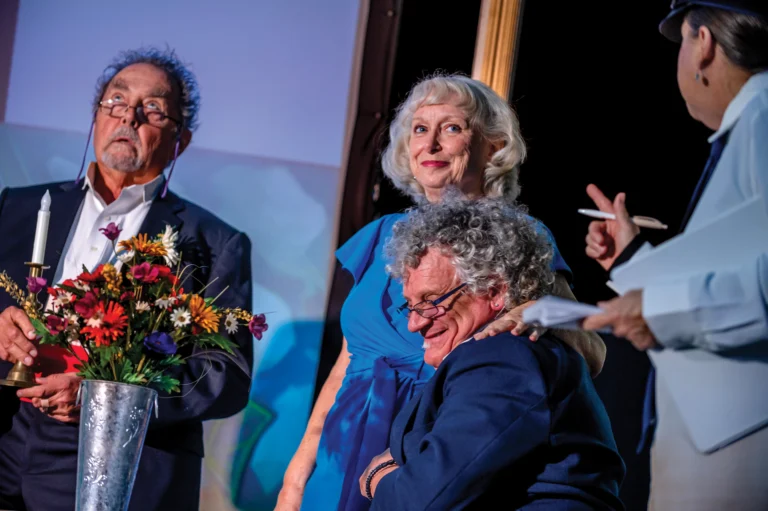
DiQuattro says the student team spent a year researching Hurston and the years leading to her on-and-off association with Rollins and the patrons and friends whom she found there, including Grover and Wunsch, who appear as characters in the show—as does the trepidatious Holt.
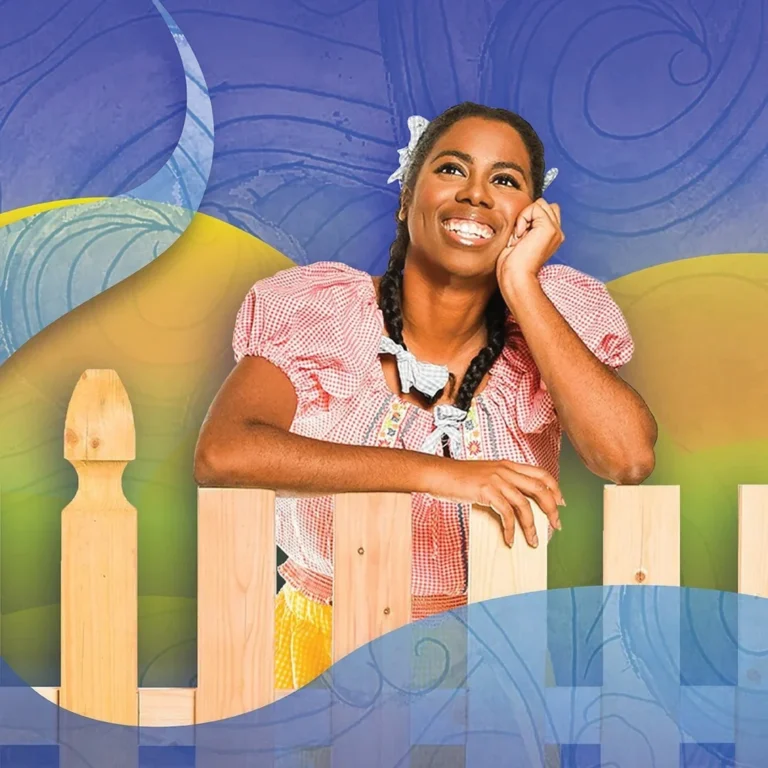
There’s even a role for Annie Russell herself, who was generally assumed to have personally objected to Hurston’s show being staged in her namesake theater, although the playwrights found no evidence that this was true. Co-writer Crawford, a first-year student, will make her college acting debut with the showy role of the determined Zora.
“We had to go way back,” says DiQuattro. “All the way back to the Harlem Renaissance and to Zora’s travels throughout the South. We also had to study race relations at Rollins and the theater’s role in segregation. But it’s really about Zora’s journey as an artist.”
The Annie Russell Theatre is located at 1000 Holt Avenue, on the campus of Rollins College, Winter Park. For more information, call 407.646.2145 or visit rollins.edu.
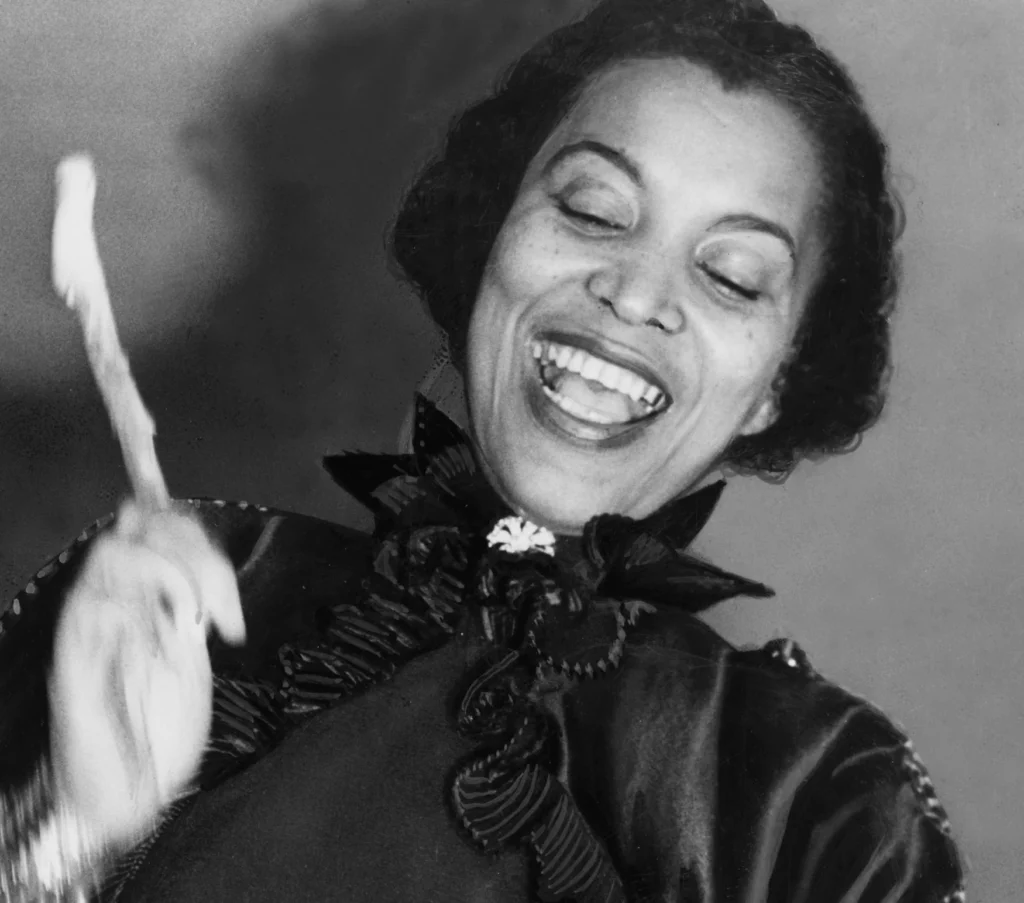
Hurston (above), who was raised in Eatonville, was not easily dissuaded, as the creators of Let the People Sing discovered. Shown are (left to right) playwrights Marianne DiQuattro, a theater professor, and students Conner Chaumley, Yasmine Hudson and Max Payton, who also directed the show’s music. | Courtesy Rollins College