

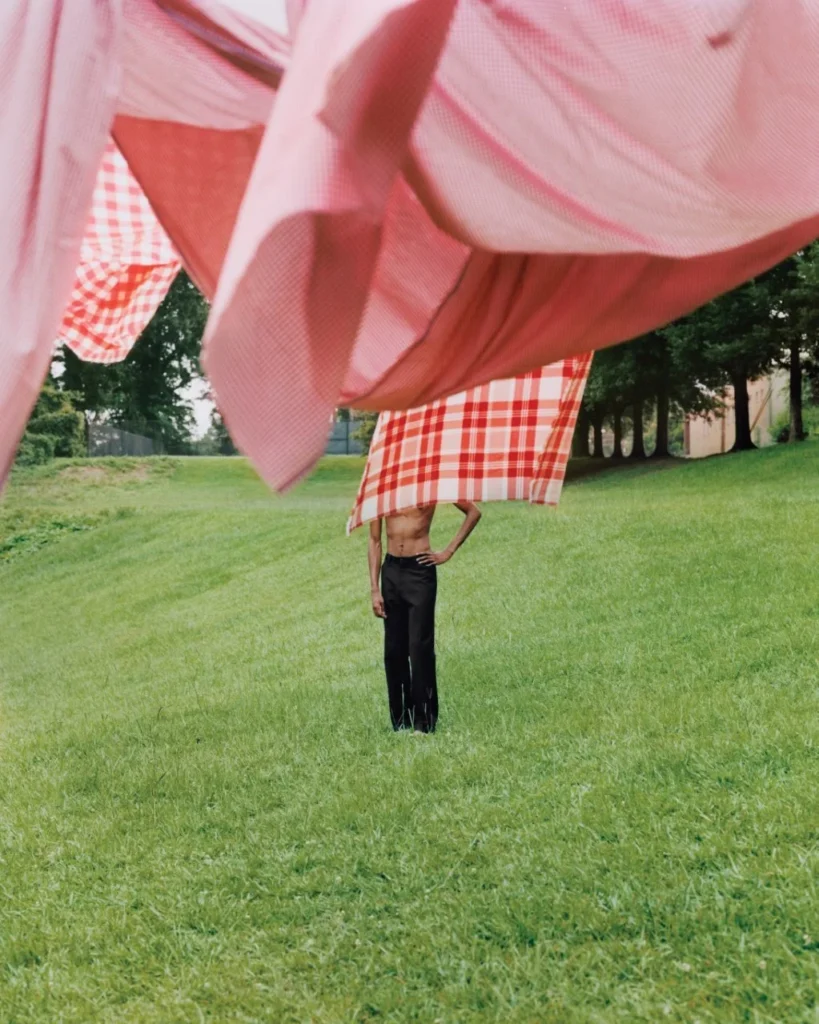
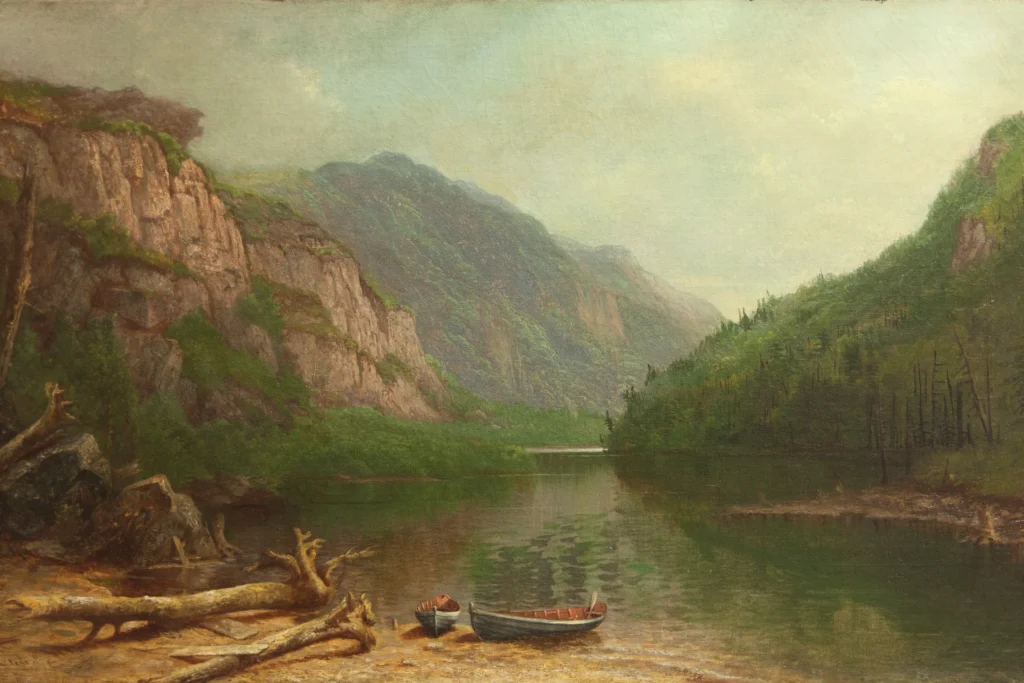
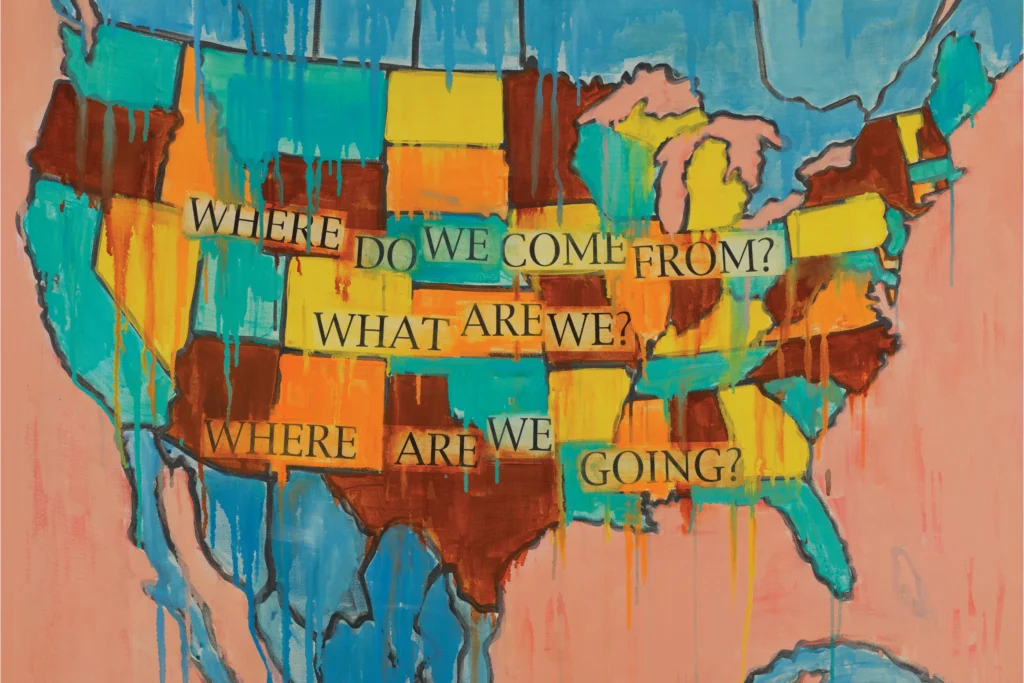
When the Rollins Museum of Art created a recreation-themed exhibition, Senior Curator Gisela Carbonell envisioned a new way of thinking about the subject. Among the works on display in Being Outdoors include Swoosh by Tyler Mitchell; Hudson River Scene by Mary Josephine Walters; and Where Do We Come From? by Jaune Quick-To-See Smith. | Courtesy Rollins Museum of Art
Known as the Father of National Parks, conservationist John Muir wrote in his 1912 book The Yosemite: “Everybody needs beauty as well as bread; places to play in and pray in, where Nature may heal and cheer and give strength to body and soul alike.”
Outdoor recreation is a quintessential part of the American experience, whether hiking through a national park, cooling off poolside during the summer or, this being Florida, picnicking in a bucolic setting most any time of year.
But when the Rollins Museum of Art aimed to create a recreation-themed exhibition that aligned with America 250, Senior Curator Gisela Carbonell envisioned a new way of thinking about our relationship with nature and our enjoyment of the great outdoors.
Featuring paintings and prints from the 19th to the 21st centuries, Being Outdoors explores how artists have visually shaped American ideas of nature, recreation and community. It also invites visitors to reflect on who, historically, has been granted access to public outdoor spaces. The exhibition closes in early January.
Carbonell and her team quickly zeroed in early on selected paintings from the museum’s permanent collection by figurative artist Robert T. Freeman, contemporary master Jaune Quick-To-See Smith and Hudson River School landscape painter Thomas Cole.
Being Outdoors also includes a carefully curated selection of loaned works from the University of Miami and University of Florida. “The exhibition showcases diverse artistic approaches to outdoor recreation and the shared experience of nature,” says Carbonell.
She continues: “Factors such as gender, labor practices and socioeconomic status may shape the leisure activities that communities engage in. These shared experiences reflect cultural values and attitudes over time and help shape American identity.”
Other works contributing to the conversation include American photographer and filmmaker Tyler Mitchell’s Swoosh—displayed as if hanging on a clothesline drying in the sun—and four 19th-century prints that depict ice skating, picnicking and beach scenes by realist Winslow Homer.
The Rollins Museum of Art is located at 1000 Holt Avenue on the campus of Rollins College, Winter Park. For more information, call 407.646.2526 or visit rollins.edu/rma.