

In the long history of fairy tales, which are often happily-ever-after fantasies, almost certainly none evolved from a reality as horrific as the Czechoslovakian story Brundibár—an opera that was performed 55 times by children inside Theresienstadt, a garrison town turned concentration camp by the Nazis in World War II.
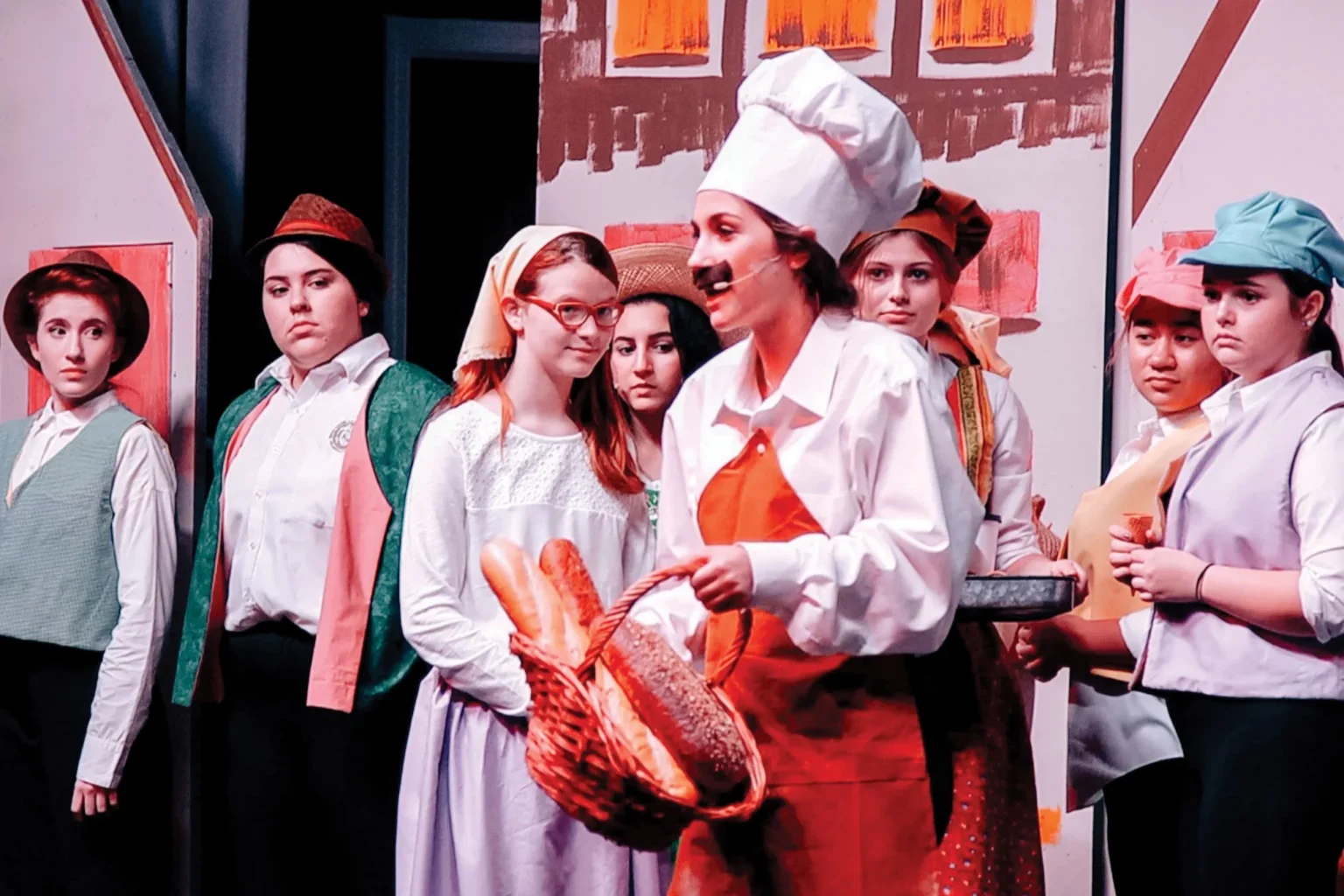
On Saturday and Sunday, December 12 and 13 at Orlando Family Stage, Opera Orlando will present Brundibár in conjunction with Vedem, a 2010 oratorio about teenage boys at Terezín (the town’s original Czech name) who produced an underground magazine of the same name. Showtimes are 2 and 7:30 p.m. on Saturday and 7 p.m. on Sunday.
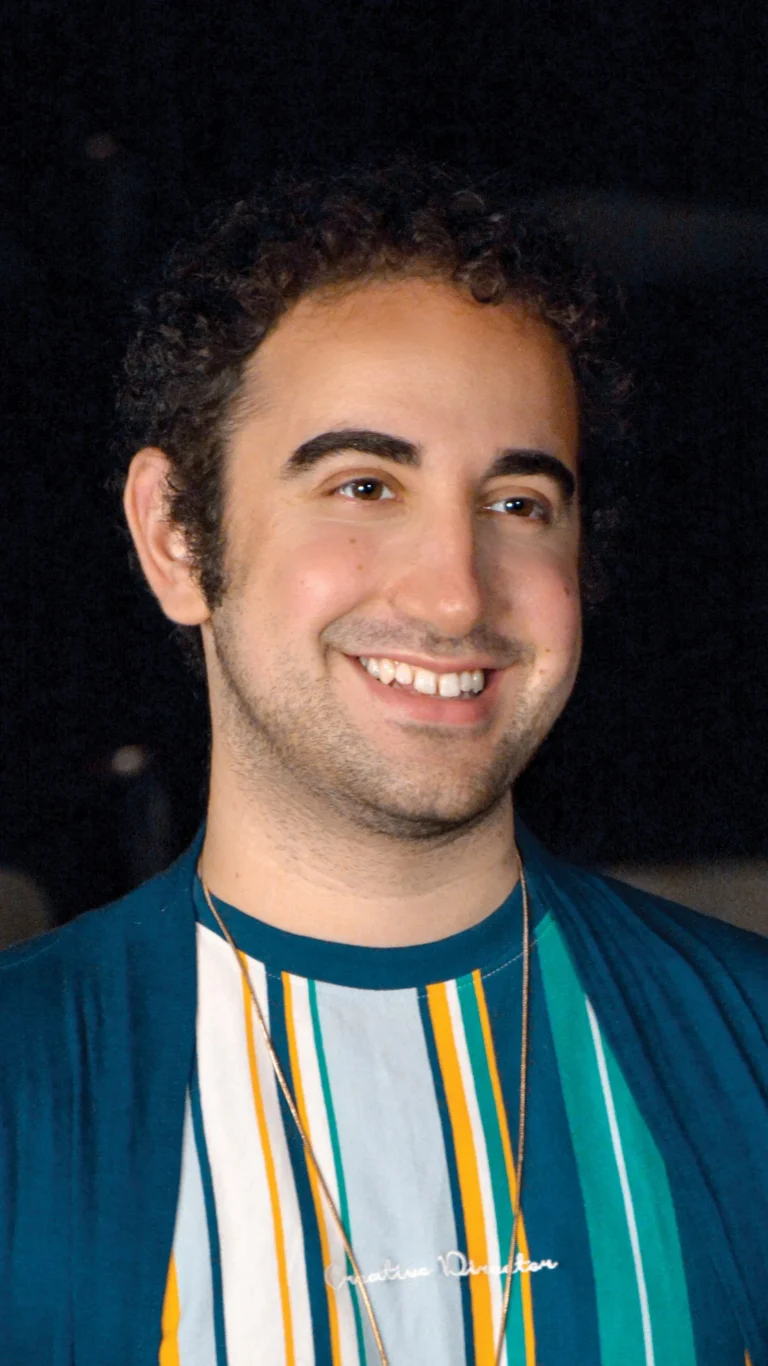
Opera Orlando first staged Brundibár and Vedem in 2017, during only its second season as a company, at the Rosen Jewish Community Center in Southwest Orlando. This season’s “more fully realized” production will reach a larger audience with its message of defiance and inspiration, says General Director Gabriel Preisser.
“Even amidst absolute brutality, a terrible existence, these children at Terezín were able to find beauty and were able to find humanity,” notes Preisser. Brundibár/Vedem will feature a live orchestra and showcase all 32 members of the Opera Orlando Youth Company—their first performance together since the pandemic.
Songs from Vedem—which frames the two works (and in which Brundibár is referenced)—provide a segue into the opera. Then, after the bittersweet performance concludes, the cast transitions back into the somber environment of Vedem. This literary bridge allows two completely separate historic works to seamlessly merge into one continuous story.
The Theresienstadt ghetto near Prague, Czechoslovakia (now the Czech Republic) was co-opted as both a concentration camp and a waystation to gas chambers by the Nazis. Of the more than 140,000 Jews sent there, some 33,000 reportedly died of disease or mistreatment and 88,000 were deported to death camps including Auschwitz.
The population included prominent artists—and despite conditions, art and culture flourished as a means of survival and defiance. Hans Krása, who composed Brundibár in 1938 with a libretto by Adolf Hoffmeister, was one of those artists.
With a smuggled partial score, he reconstructed the opera, adapted it to instruments available in the camp, recruited an orchestra and child cast, and produced the opera. The performance was so popular that the Nazis featured it in a propaganda film, The Führer Gives the Jews a City, and staged it during an inspection of the ghetto by the American Red Cross.
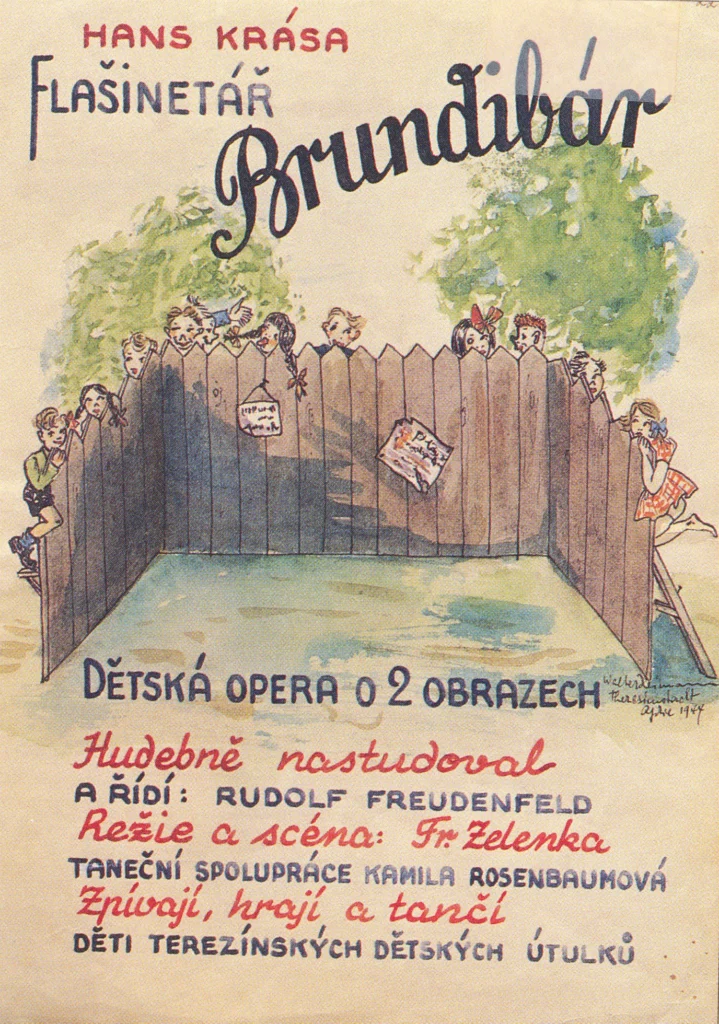
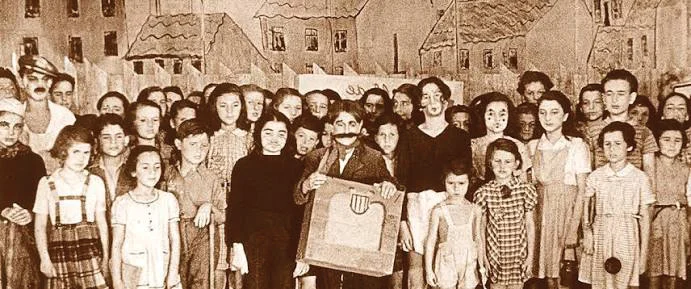
The original Terezín performance of Brundibár was so popular that the Nazis featured it in a propaganda film and staged it during an inspection of the ghetto by the American Red Cross. Tragically, most cast members were eventually sent to such death camps as Auschwitz. | Courtesy Opera Orlando
Brundibár’s story, one of good triumphing over evil, communicates hope in times of trouble and was lyrically tweaked in places to be subtly subversive. It follows a brother and sister who, although they have no money, set out to find milk for their ailing mother.
The villainous Brundibár—a mustachioed organ grinder whom most viewers (with the notable exception of Nazis) recognized as a stand-in for Hitler—chases them away when they try to sing for donations. Then a trio of animals—a dog, a cat and a bird—come to their aid and rally townspeople to support them.
The original libretto was translated into English by noted playwright Tony Kushner (Angels in America), who collaborated in 2003 on a Brundibár picture book with the celebrated children’s book illustrator and author Maurice Sendak (Where the Wild Things Are). The finale includes this verse:
The wicked never win!
We have our victory yet!
Tyrants come along, but you just wait and see!
They topple one-two-three!
Our friends make us strong!
And thus we end our song.
Lori Laitman composed Vedem with a libretto by David Mason through a commission from Music of Remembrance, an organization focused on human rights and social justice.
The literary endeavor Vedem, which translates to “we are leading,” was a secret, hand-produced underground literary magazine created by Jewish teenage boys imprisoned in Terezín that contained essays, stories, artwork, poetry and more.
Brundibár was actually reviewed by a young writer in an issue of Vedem, providing a profound historical link between the two groups of children. Laitman and Mason’s oratorio incorporates the stories of the incarcerated boys with a selection of their poems—including this opening chorus:
Oh hear our story now.
Hear our story as it comes to us, for we are vanished from the world you love,
and we are nothing without memory.
Opera Orlando’s production of Brundibár / Vedem continues its relationship with the Holocaust Memorial Resource and Education Center of Florida in Maitland. In 2024, the company staged the Florida premiere of Defiant Requiem: Verdi at Terezín, a tribute to the masterpiece performed in the Czech ghetto.
These productions meet the center’s mission of helping people understand the Holocaust not merely in terms of the number of deaths but of the individuals lost, says Stephen Poynor, senior director of education and community engagement. He adds: “The stories of resilience in the face of utter destruction are so important.”
Brundibár and Vedem are in themselves memorials to life, not death. In Terezín, children sang to the indomitable human spirit and adolescent boys defied oppression with art and self-expression. You can learn more at the talkbacks that are scheduled after each performance.
Orlando Family Stage is located at 1001 East Princeton Street in Orlando. Visit operaorlando.org for more information.