

Roadside tchotchkes might be collecting dust in the corner of your kitchen junk drawer and become the first items to get tossed during a cleaning spree—but Floridiana: Material Culture from The Sunshine State at the Orlando Museum of Art urges you to take a closer look.
“They can tell us as much about a place and a period as any painting or photograph,” says Coralie Claeysen-Gleyzon, the museum’s chief curator. Built from the collection of longtime photographer and author Gary Monroe, Floridiana reveals how Florida imagined itself as a place of fantasy and adventure in the mid-20th century. The exhibition, now on view, runs through early February in OMA’s Weyand Gallery.
Monroe, who was born and raised in Miami Beach, was inspired to explore photography as an undergraduate art student at the University of South Florida in the 1970s.
After relocating to Central Florida in 1987, he became fascinated by the state’s manufactured tourism experiences—particularly by the spectacle of Disney World and the attractions surrounding it. So, he began collecting kitschy keepsakes that represented tourism as it looked pre-Disney.
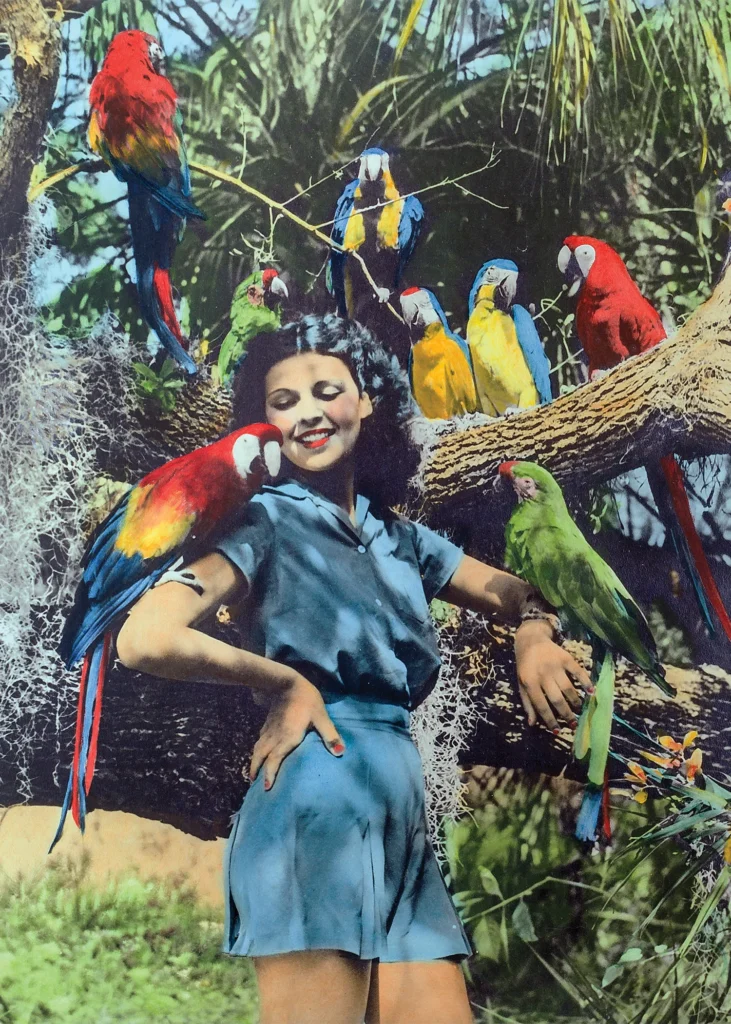
In Floridiana, more than 130 objects are presented from Monroe’s eclectic collection, including exoticized landscape paintings, vintage signs and postcards, hotel ashtrays, alligator purses and roadside attraction brochures—all a nod to the state’s stature as an iconic (and often quirky) tourist destination for many decades prior to arrival of the Mouse.
This ephemera comes from a period when roadside attractions, motor courts and souvenir stands were often small and scrappy, built by people who improvised a version of paradise with limited resources and a lot of imagination, says Claeysen-Gleyzon.
She adds: “These objects were never trying to convince anyone they were authentic. They were selling an idea of leisure and escape, with a touch of eccentricity.”
Florida’s relentless growth and hordes of international visitors has contributed to its melting-pot vibe, which is also showcased in the exhibition through objects that represent various cultures and geographies, including native Seminoles, Haiti, Mexico and Cuba.
But while today’s tourism economy is now dominated by large-scale, highly engineered experiences, it’s still good old fantasy that shapes how the state is imagined from the outside.
Adds Monroe: “Florida has long been a place where experience is packaged as spectacle, where fantasy and reality overlap, and where images—whether postcards, photographs, attractions, or contemporary media—help construct the idea of Florida as much as they document it. Joy and curiosity, along with an enhanced sense of place, are central to the exhibition’s experience.”
Orlando Museum of Art is located at 2416 North Mills Avenue, Orlando, in Loch Haven Cultural Park. For more information, call 407.896.4231 or visit omart.org.