If someone asked you whether or not a piece of art is beautiful, your answer would be based on your personal taste. As the saying goes, beauty is in the eye of the beholder. For years, we’ve taken a similar approach to defining a strong arts and culture sector. The answer often felt intuitive—something you recognize when you feel it.
But as Central Florida has continued to grow, we need more concrete information to guide our decisions. We need a shared framework that tells us when the cultural sector is not just surviving but thriving. Because when the arts thrive, we all thrive.
Earlier this year, I shared an update about 19 local organizations that participated in a multiyear capacity-building initiative through the DeVos Institute of Arts and Nonprofit Management.
This program, which was made possible through a partnership between the DeVos Family Foundation and United Arts of Central Florida, helped organizations design strategic plans to reach new audiences, as well as to deepen their engagement, to grow their resources and (not least of all) to create great art.
United Arts underwent that same process and is proud to extend the framework we adopted beyond our own organization. The result of this work not only guides our internal operation but shapes how we strategically invest in and support the entire arts and culture ecosystem.
This shared structure allows us to work together toward common goals and to hold ourselves accountable for successfully realizing our new vision: to create a thriving arts community that fuels lasting prosperity, creativity and well-being for all in Central Florida.
Through this important exercise, we identified eight key indicators of a thriving cultural sector. These are not abstract ideas. They are rooted in research by national leaders and are grounded in measurable progress.
First, a thriving cultural sector begins with a Thriving Artistic Community. Artists of all disciplines must have the resources to grow, space to create and platforms from which to share their work.
Second, we need Robust Arts and Culture Organizations. From large institutions to small grassroots groups, strong executive leadership and financial sustainability are essential. Organizations must also collaborate with sectors such as education, tourism, social services and health to expand their reach and relevance.
Third, we need to nurture an Engaged and Growing Audience. The arts must be accessible to everyone regardless of income, age, race, ability or geography. True engagement means that people feel seen, welcomed and inspired to participate and give.
Fourth, we must value Innovation and Creativity. It encourages experimentation, new ideas and collaboration. We must remain open to change and responsive to the developing needs of our ever-evolving communities. For example, within the next 20 years, our largest population will be adults age 55-plus.
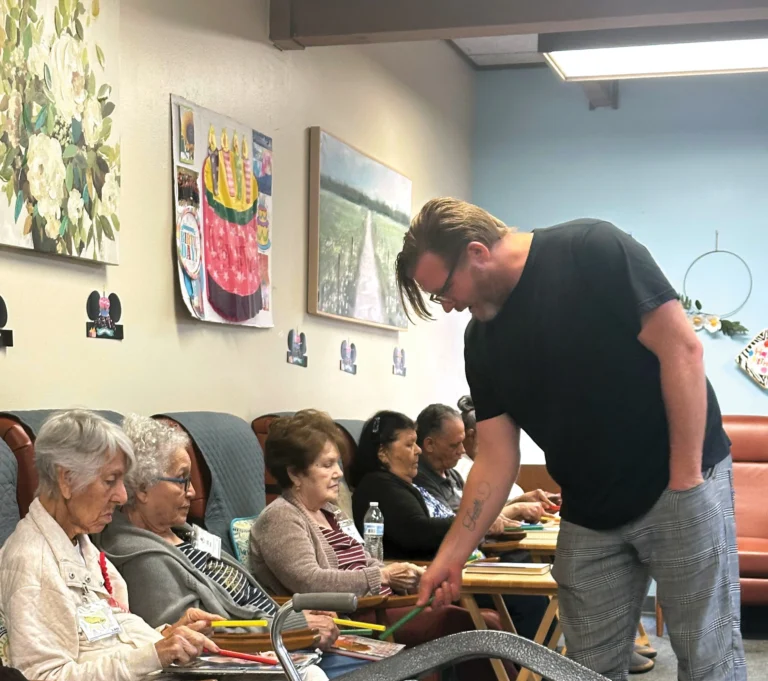
Fifth, we must invest in Education and Lifelong Learning. From early childhood through senior adulthood, everyone deserves access to creative learning. This includes strong arts education in schools across every community to create pathways into careers in the creative industries, and creative aging workshops for seniors held in places where they live and play.
Sixth, we must work within a Supportive Environment. Public investment, private philanthropy and policies that value the arts all play a role in creating stability. Everyone has a part to play in building that foundation, including you!
Seventh, we need strong Infrastructure. This means well-maintained and geographically accessible venues, galleries, studios and rehearsal spaces. And, like all other sectors, we need 24/7 transportation that connects people to the arts.
Eighth, we must measure the ongoing Economic and Social Impact of the arts. In Central Florida, we know that the arts contribute more than $500 million to our local economy and support nearly 10,000 jobs each year. According to a 2023 study by Americans for the Arts, the cultural sector added more than $1.1 trillion to the U.S. economy.
These numbers matter because they tell a bigger story: The creative economy is not a footnote to our community’s success; it is central to who we are.
Every year, United Arts supports 125-plus nonprofit organizations, reaching more than 3.1 million people across Lake, Orange, Osceola, and Seminole counties. We contribute more than $6 million in grants for unrestricted operating support, individual artists, community vibrancy and community art projects.
Those grants, plus an additional $12 million managed and distributed by United Arts for Orange County Arts & Cultural Affairs and the City of Orlando, means that we deploy more than $18 million annually into our local creative economy to help it thrive.
Orlando is the most visited destination in the United States. And while we’re proud of our beaches and theme parks, our community’s goal is to become a global creative capital by 2045. Without a thriving cultural sector we will not achieve this bold goal.
We hope you will share that vision.
JENNIFER EVINS
President & CEO
United Arts of Central Florida