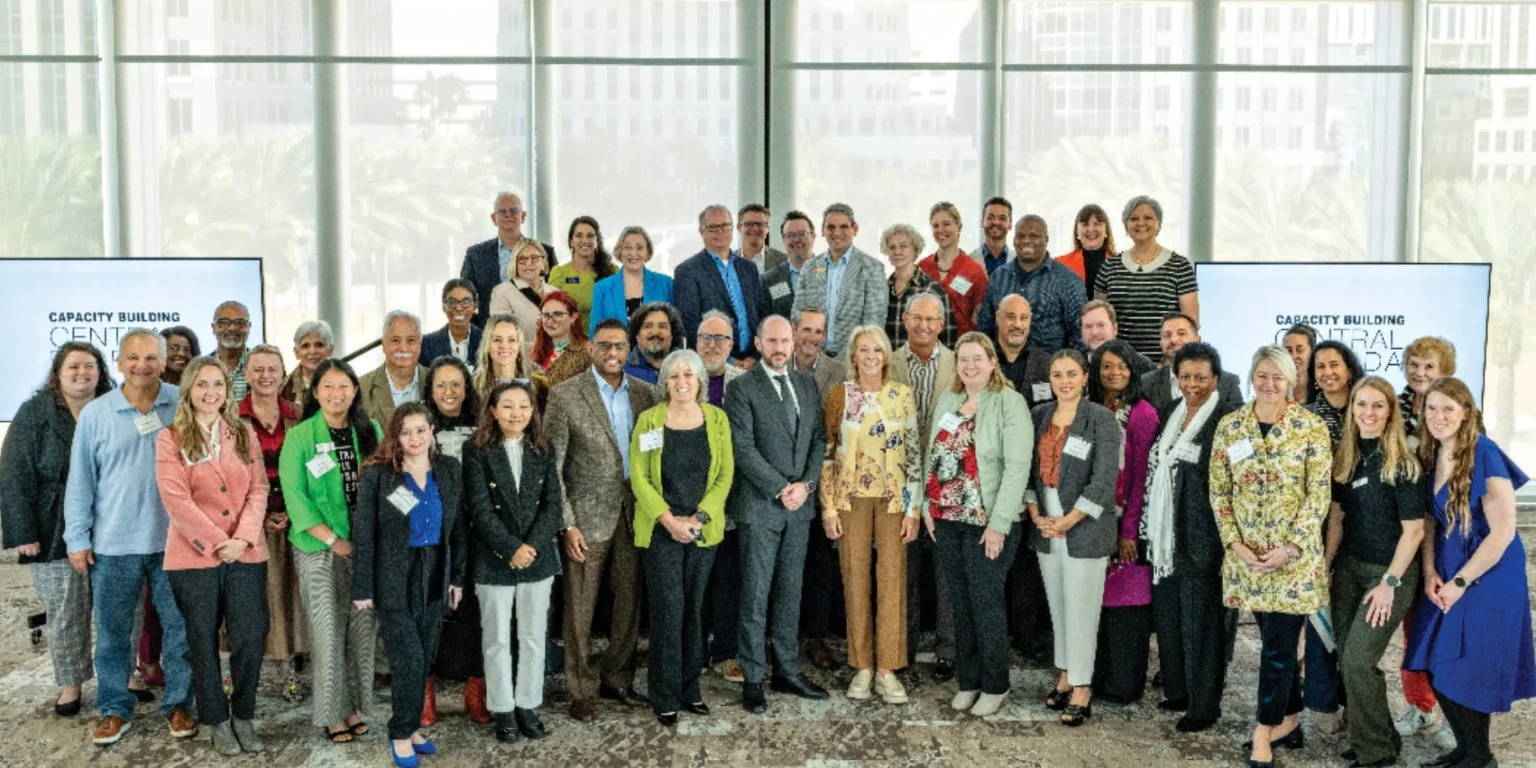
Courtesy Capacity Building: Central Florida
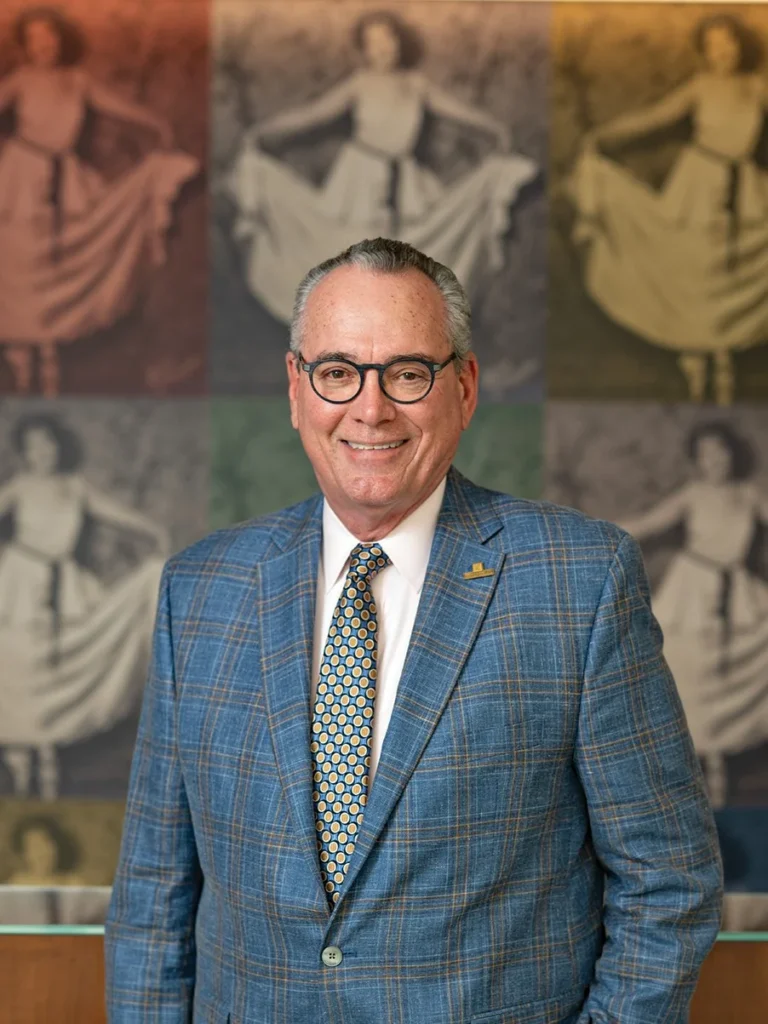
David Odahowski knows first-hand that people who are the most adept at creating art are not necessarily people who are the most adept at running arts-related nonprofits. This observation is applicable to any type of cultural endeavor, he says, regardless of the organizer’s visionary zeal.
Odahowski, president and CEO of the Winter Park-based Edyth Bush Charitable Foundation for more than 36 years, has seen plenty of well-intentioned endeavors falter because of deficiencies related to governance, finance, marketing and strategic planning.
“So many arts groups just try to keep their heads above water from season to season,” says Odahowski, whose organization is known for its exacting grantee requirements. “To fund them with confidence, we need to see that they’re sustainable and forward-looking.”
Jennifer Evins knows all this, too. Before she was hired as president and CEO of United Arts of Central Florida in 2021, she had spent more than a decade leading the Chapman Cultural Center in Spartanburg, South Carolina. “Running a nonprofit is like running a business,” she says. “It goes beyond just having a passion for a cause.”
So Evins and United Arts—with the support of the Edyth Bush Charitable Foundation, Orange County Arts & Cultural Affairs and the Dick & Betsy DeVos Family Foundation—commissioned an intensive Arts Ecology Study with the DeVos Institute of Arts Management in Washington D.C. The trio of local partners each kicked in $25,000 while the foundation, based in Grand Rapids, Michigan, added a grant of $75,000.
The Institute is a global leader in providing consulting, training and implementation support for organizations related to arts, culture, education and humanities. Its clients over the past 25 years have included nearly 3,000 nonprofits, governments and foundations across the globe. The study, which Evins described as “a level-setter,” was completed in 2023.
“I would say, at that time, the arts were at a tipping point,” says Odahowski. “We were just coming out of COVID-19. For a while it wasn’t clear that people would ever want to gather in groups and come to performances again.”
Among the study’s findings included many positives: The area’s nonprofit arts community is indeed vibrant and collaborative—and contributes some $500 million annually to the region’s economy. But it is also saddled with structural vulnerabilities that could hinder its ability to keep pace with the dynamic growth of Central Florida.
(The study provided the framework for CANVAS, a 10-year cultural roadmap developed by Orange County, the City of Orlando and the Downtown Development Board as a public policy vehicle to resolve challenges identified by the study.)
Also based upon the study’s results, the Institute—via a $1 million grant from the DeVos Foundation—followed up with a two-year program dubbed “Capacity Building: Central Florida,” which was designed to strengthen arts groups and the arts ecosystem as a whole.
Individual arts organizations of all sizes were invited to join via a competitive application process. About 20 were selected for Capacity Building, while startups and smaller groups participated in an Accelerator Lab.
The program was led by Institute Chairman Michael M. Kaiser, a former chairman of the John F. Kennedy Center for the Performing Arts, and President Brett Egan, a former executive director of Shen Wei Dance Arts and interim CEO of the Royal Opera House Muscat in Oman.
Capacity Building participants underwent deep-dive monthly training sessions, held at various locations, where they were laser-focused on the fundamentals. The core curriculum included such topics as planning, fundraising, marketing and board governance. In addition, the Institute provided customized, one-on-one consulting to arts organization leaders.
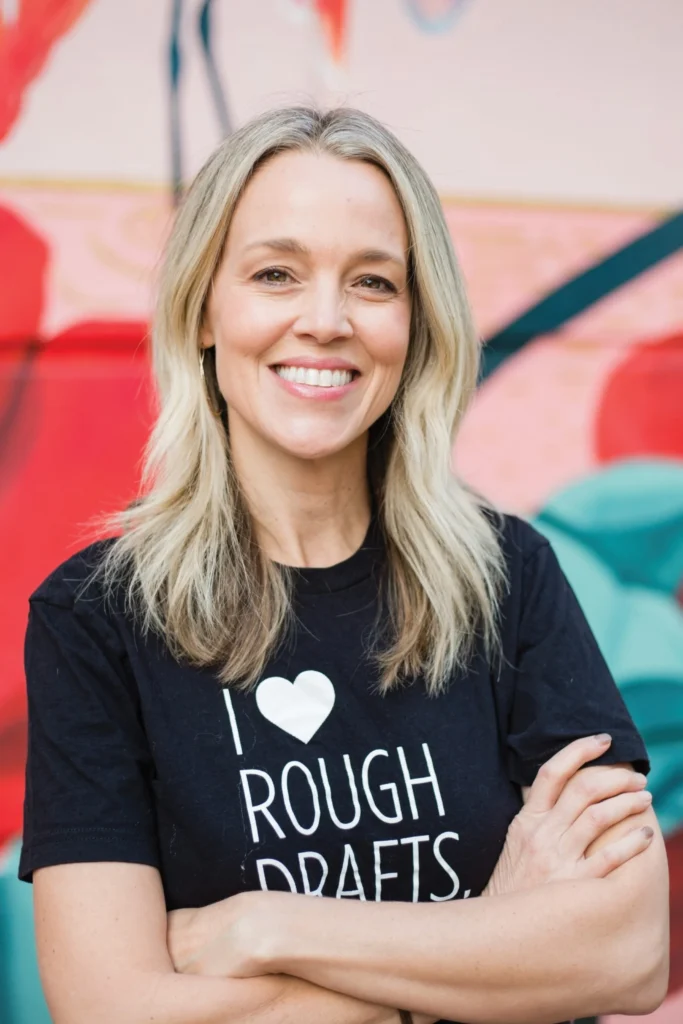
“As one of the smaller organizations participating, the ability to access this level of expertise was huge for us,” says Julia Young, founder and executive director of Page 15, a local youth literacy and creative writing empowerment nonprofit. “It was very elevated, very special and a very exciting opportunity.”
Young says that through the program she came up with several practical expansion ideas—such as increased investment in Page 15’s youth publishing effort—and has plans to adopt more formalized approaches to documentation, operations and curriculum development as well as marketing.
Adds Young: “It’s kind of ironic that, as storytellers, we found that we weren’t that great at telling our own story. I think we had fallen into that.”
Orlando Ballet, which didn’t participate in the most recent program because it had individually engaged the Institute in 2016—back when the company was in the midst of a financial crisis—was a major advocate for bringing the team back to conduct a larger study and involve more arts groups.
According to Executive Director Bradley Renner, the ballet’s adoption of principles learned from the Institute ultimately strengthened the organization—which went on to engineer a massive turnaround over the past several years. After decades of barely hanging on, it evolved into the sort of blue-chip nonprofit favored by foundations.
“We have buy-in from Edyth Bush now, which is really a great gift for the community,” says Renner. In fact, this year the ballet got the largest grant from the foundation of any local arts group—and will use the money for audience building and marketing initiatives. Adds Renner: “We need to celebrate that.”
The capstone for both Capacity Building and Accelerator Lab cohorts was to deliver an actionable, data-driven, three- to five-year strategic plan. Then the DeVos Foundation—to everyone’s surprise—awarded organizations that had completed the program a total of $150,000 in “acceleration grants” to help make those plans a reality.
Still, everybody will need to pitch in. “Implementation will require not only leadership within the organizations but also active participation from the broader community,” says Egan. “Patrons, donors, policymakers and advocates all play a role in ensuring that these organizations have the support they need to thrive.”
No one was happier about the Arts Ecology, Capacity Building and Accelerator Lab programs than David Odahowski. He’s certain, he says, that this emphasis on sustainability and organizational rigor will open the door for more potential grantees to successfully seek funding from the foundation.
At the January concluding event—held, appropriately, in the DeVos Family Room at Dr. Phillips Center—his encouraging words must have been music to the ears of participants at every level.
“For a time, our arts community drifted,” recalled Odahowski of the sector’s emergence from COVID-19. “In nautical terms, we needed a rudder: the time-tested principals of nonprofit management, strong governance, accountability and leadership.”
Continued Odahowski: “Before we could believe in ourselves again, we needed someone to believe in us—and that someone was the DeVos Foundation. [Their leadership] has strengthened the confidence of the Edyth Bush Charitable Foundation and other funders, enabling us to invest in the arts with greater conviction and at levels never before possible.”
In fact, such investments are already happening: In fiscal year 2025, Edyth Bush granted $1,246,250 to local arts organizations. The largest among them was $500,000 to commemorate the 100th anniversary of Orlando Family Stage—to which the foundation’s namesake, an actress-turned-philanthropist, had personally donated in the 1960s.
In fiscal year 2026, the highly respected grant maker—which has for many years advocated for improved operations through its Edyth Bush Institute for Philanthropy & Nonprofit Leadership—gave $1,086,000 to a wide variety of arts groups, including $100,000 to a participant who had never before received a grant from the foundation: Florida Symphony Youth Orchestras.
“Oh, I’m sure there’ll be other first-timers,” says Odahowski. “Some of them just haven’t asked yet.”
Program Participants
The following groups were selected for the Capacity Building: Central Florida
- Art & History Museums of Maitland
- Central Florida Community Arts
- Downtown Arts District
- Enzian Theater
- Florida Symphony Youth Orchestras
- FusionFest
- IDEAS For Us
- Mead Botanical Garden
- Open Scene
- Orlando Family Stage
- Orlando Fringe
- Orlando Museum of Art
- Orlando Philharmonic Orchestra
- Orlando Science Center
- Orlando Shakespeare
- Orlando Urban Film Festival
- Page 15
- Ritz Community Theater Projects
- Timucua Arts Foundation
- United Arts of Central Florida
Accelerator Lab
The following groups were selected to participate in the Accelerator Lab:
- ArtReach Orlando
- Caribbean American Passport Multicultural Initiative
- Central Florida Ballet
- Central Florida Vocal Arts
- Chance 2 Dance
- Conservatorio de Música y Artes
- Creative City Project
- Descolonizarte Teatro
- Historical Society of Central Florida
- Holiday Hoops & Arts
- Kizzy’s Books & More
- Lake Nona Arts
- Mudita America
- Peace Pavilion
- Seminole Cultural Arts Council
Catalyst Grants
The following groups received Catalyst Grants from the DeVos Foundation to help implement their master plans:
- Art & History Museums of Maitland
- Central Florida Community Arts
- Enzian Theater
- Florida Symphony Youth Orchestra
- Page 15
Seed Grants
The following groups received Seed Grants from the DeVos Foundation for specific projects:
- ArtReach Orlando
- Central Florida Vocal Arts
- Chance 2 Dance
- Peace Pavilion
- Seminole Cultural Arts Council