

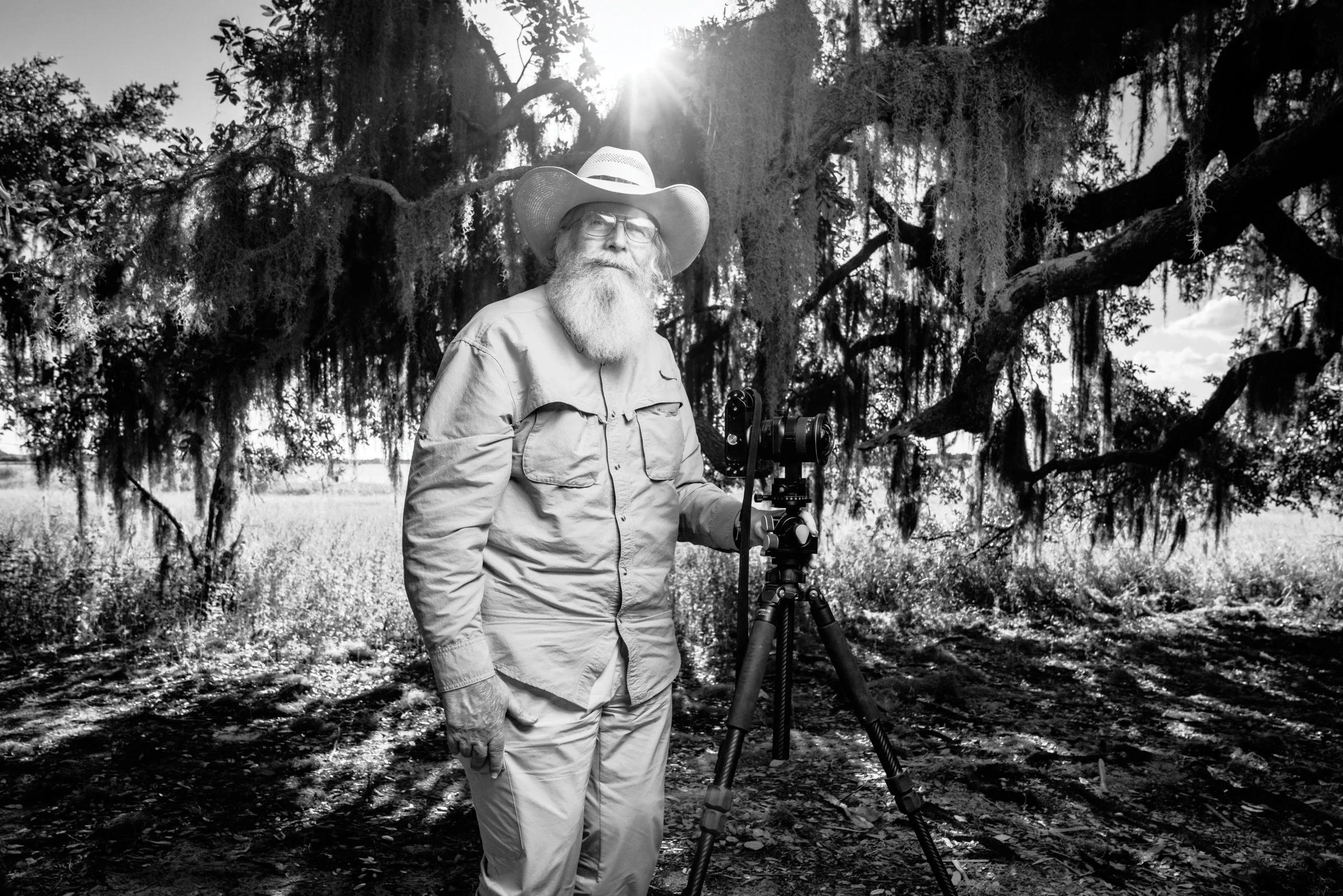
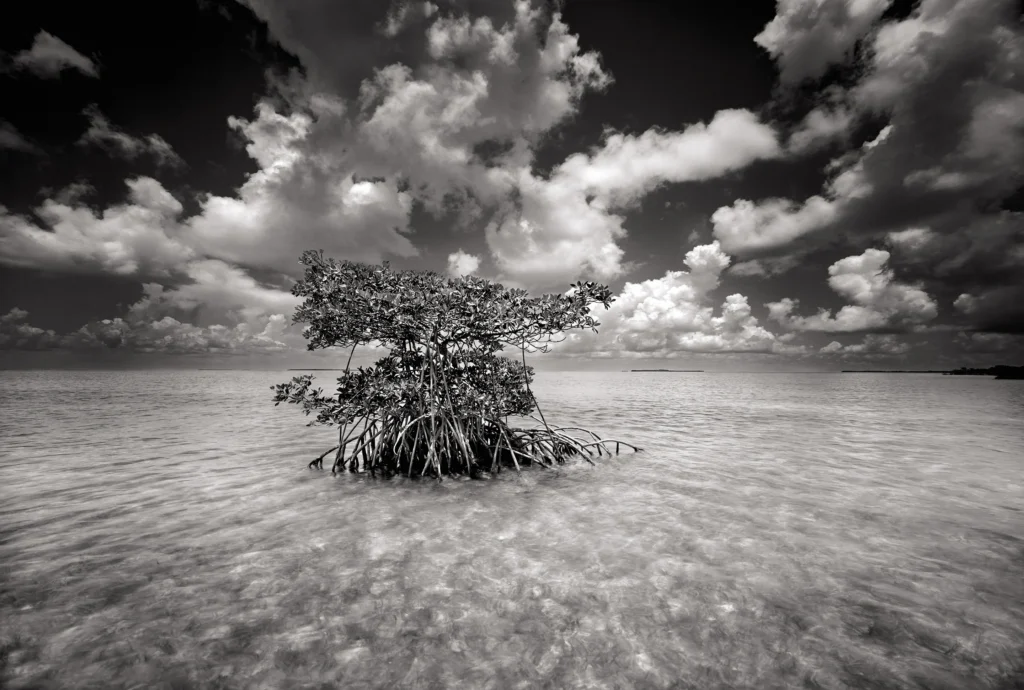
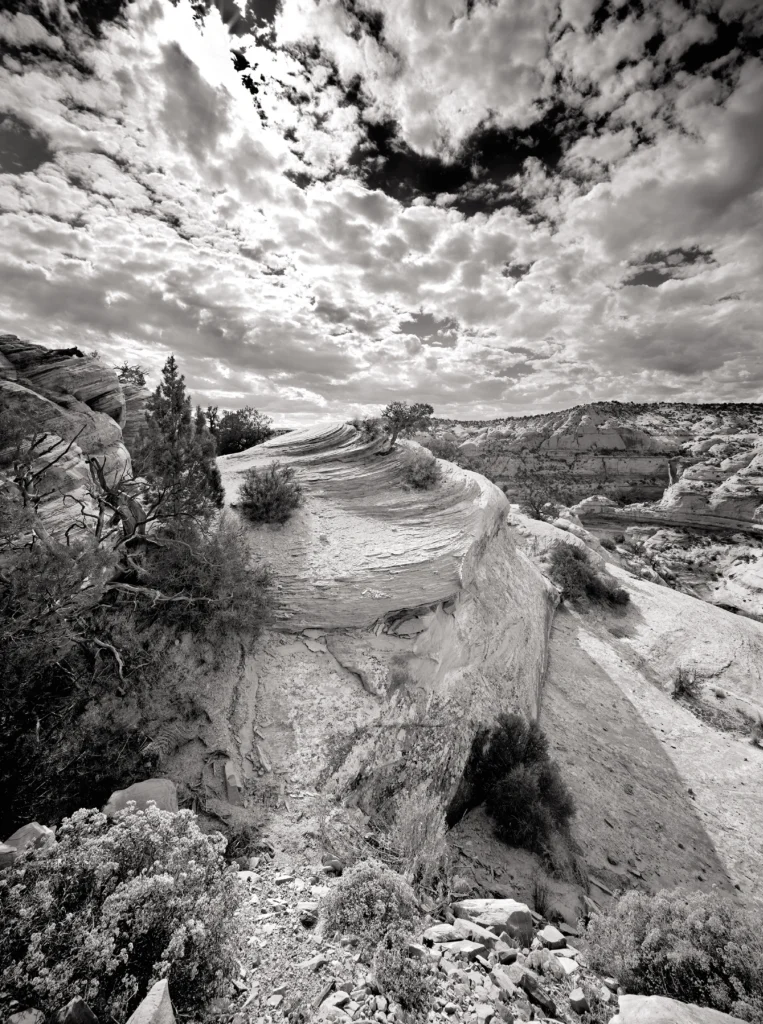
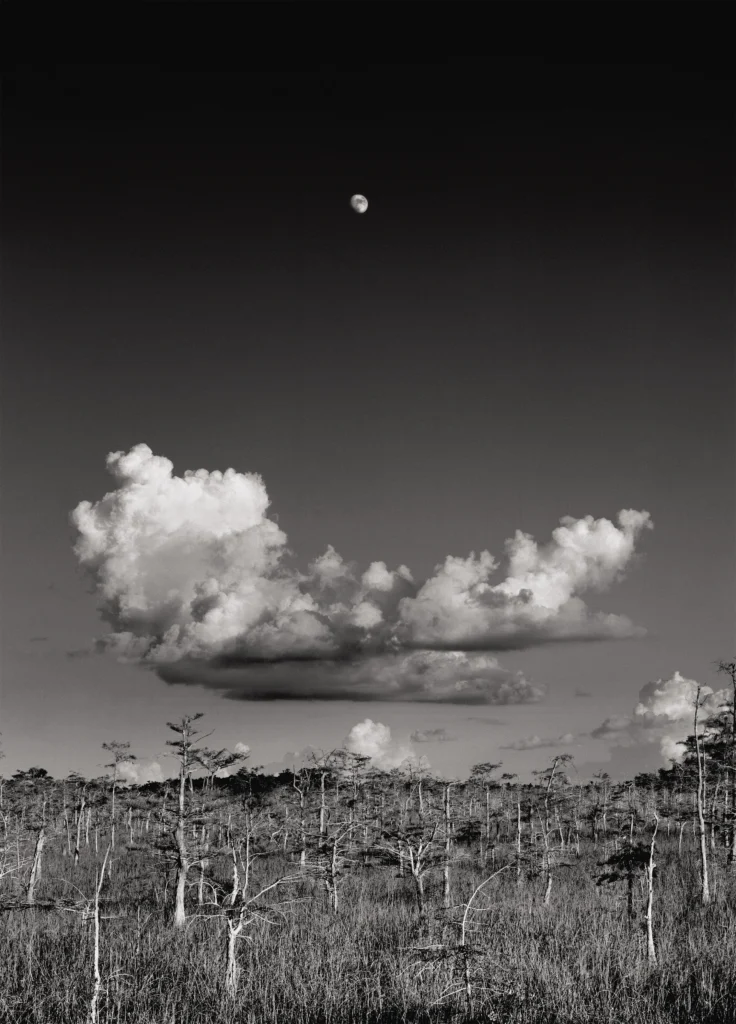
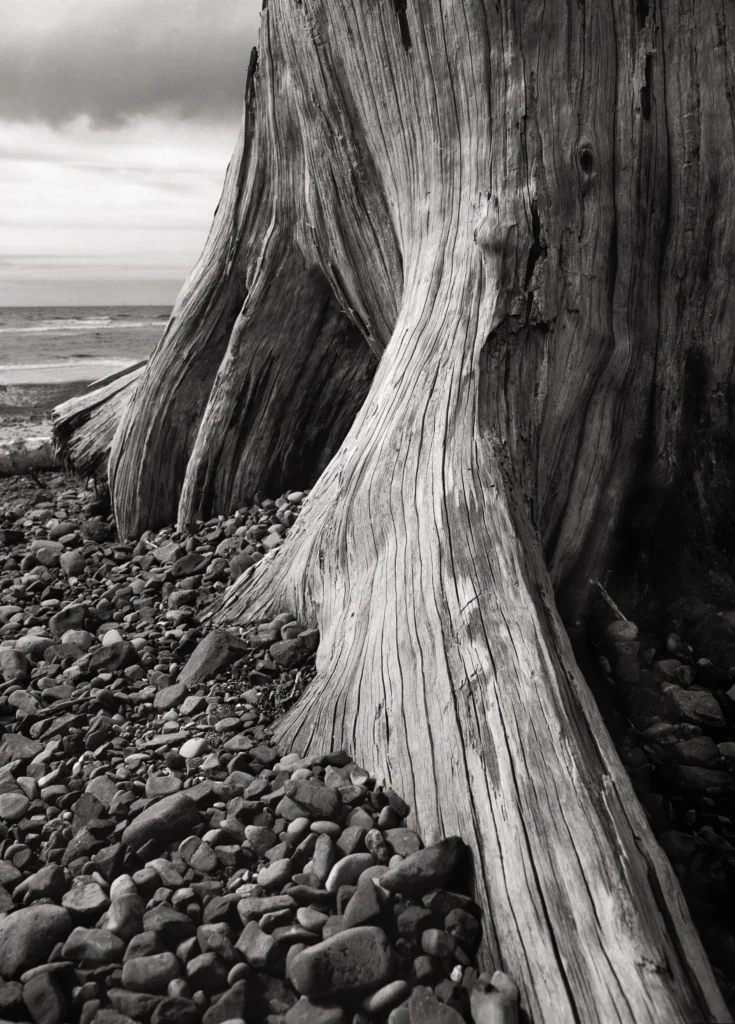
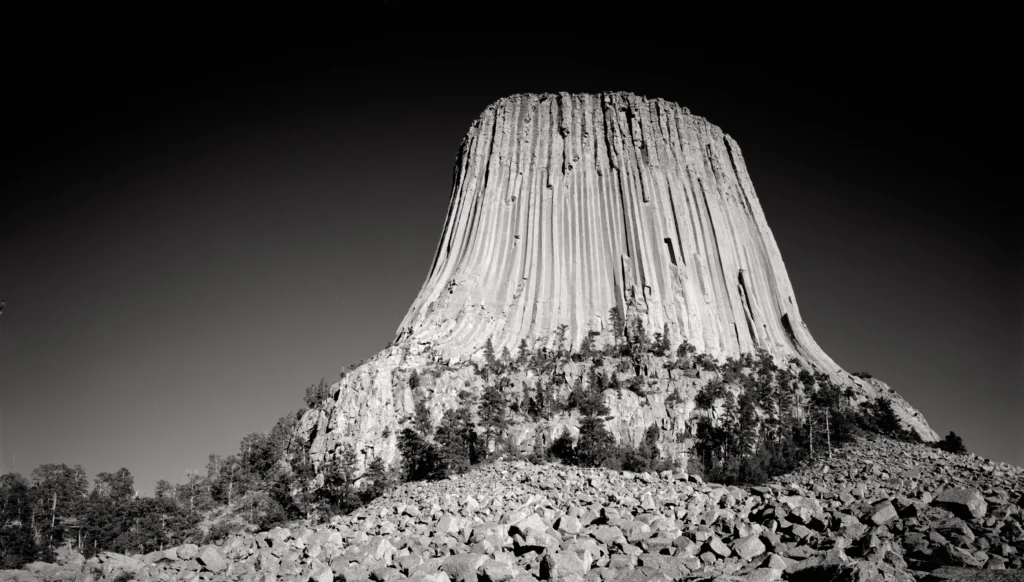
Clyde Butcher, the iconic “Ansel Adams of Florida,” has dedicated the majority of his life to capturing the most stunning landscapes across the country—most notably in the Everglades but also in the American West. Among the Butcher images on display are Shell Key, Escalante River Canyon, Moonrise and Driftwood and Devil’s Tower. Butcher himself will be at the Polasek on Thursday, October 8, to offer two lectures, meet fans and sign books. | Courtesy Clyde Butcher
Mobility walkers aren’t made to be used in the swamp, which is perhaps why Clyde Butcher is on his fourth walker. At age 84, the legendary landscape photographer is as persistent as ever and still believes in earning every photograph he takes.
Butcher visited a Fort Myers beach on 24 different days just to get the right light for one shot. He repeatedly trudged deep into Big Cypress National Preserve over the course of nine years until the elements cooperated enough to inspire one of his most famous images, Cigar Orchid Pond.
He now refuses to allow the physical limitations that linger from a stroke in 2017 to keep him from his calling. “I want to continue saying things,” says Butcher. “Educating people is my motivation.”
Indeed, the aptly dubbed “Ansel Adams of Florida” has dedicated the majority of his life to capturing the most stunning landscapes across the country—most notably in the haunting environs of the Florida’s Everglades.
Dozens of these extraordinary black-and-white silver gelatin photographs comprise America the Beautiful: The Monumental Landscapes of Clyde Butcher, which is on display through December 6 at the Albin Polasek Museum & Sculpture Gardens in Winter Park.
“What impresses me most about Clyde Butcher is his dedication to his craft,” says Tamie Diener-Lafferty, curator at the Polasek. “He creates remarkable images with depth and detail. His patience, technical mastery and commitment remind me of our museum’s founder, [sculptor] Albin Polasek and his unwavering dedication to his art.”
Although he is synonymous with Florida, Butcher was born in Kansas City, Missouri, and attended California Polytechnic University in Pomona, graduating with a degree in architecture that, he says, “taught me how to see.”
While visiting Yosemite National Park in 1963, Butcher saw an exhibition of landscape images by Ansel Adams and was profoundly influenced. He worked as an architect for several years, but in 1970 became a full-time photographer.
He started a company, Eye Encounter, which sold his works to the wall décor departments of Sears, JCPenny and Montgomery Ward. Eye Encounter, with offices in Ohio and Southern California, eventually employed some 200 people.
Most of Butcher’s photographs were of scenic locations in the Pacific Northwest. Although he preferred to work in black and white, as Adams did, he found that color was more marketable.
Butcher and his wife, Niki, lived for a time on a sailboat moored in the harbor of Newport Beach, California. But their love of boating—and, oddly, the television series Flipper—inspired the couple to explore Florida.
Frustrated by corporate responsibilities, Butcher sold his business in 1977 and moved to Fort Lauderdale, then Fort Myers. He began selling his photographs at festivals—including the Winter Park Sidewalk Art Festival—in the early 1980s.
In 1986, the Butchers’ teenaged son, Ted, was killed in a collision with a drunk driver. Seeking solace and restoration, the couple retreated to Big Cypress, which borders the freshwater prairies of Everglades National Park to the south. Says Butcher: “I just took [photos of] things that I thought were important.”
Butcher then resolved to use only black and white film and destroyed his color work, hiring a bulldozer to plow under hundreds of thousands of dollars’ worth of images—and a decade’s worth of inventory.
He bought a bulky 8-by-10 view camera with accordion-pleated bellows for which the large-format film had to be loaded shot by shot. It was a time-consuming process but ideally suited for the kind of high-definition black-and-white photography that would earn international acclaim for Butcher.
Many of his most iconic photographs have been collected in such books as America the Beautiful; Big Cypress Swamp: The Western Everglades; and Celebrating America’s National Parks, Preserves, Monuments, Recreation Areas.
In 1992, PBS aired a documentary about Butcher called Visions of Florida. He has hosted other PBS specials that focused on conservation, including Big Cypress Swamp: The Western Everglades and Kissimmee Basin: The Northern Everglades.
Butcher’s impact as an artist and an environmentalist has been recognized in seemingly countless fashions, including most recently in 2022 when President Joe Biden presented him with the National Medal of Arts at the White House.
Butcher’s exhibition at the Polasek encompasses the places that have become synonymous with his work, from the Redwood forests of California to the Everglade swamps of Florida—a well-timed juxtaposition that honors the 250th anniversary of America.
Several of the images measure more than 6 feet in length, allowing visitors to appreciate every detail. One of Butcher’s large-format cameras is also on display, which means aspiring shutterbugs are allowed to peer through the lens and perhaps gain a better understanding of his craft.
Butcher has two galleries where his work is displayed and sold: Big Cypress Gallery, 52388 Tamiami Trail in Ochopee, and the Venice Gallery & Studio, 237 Warfield Avenue in Venice. (For more information, visit clydebutcher.com.)
But he’ll be at the Polasek on Thursday, October 8, to offer lectures at 1 and 6 p.m. There’ll be opportunities for book signings and gallery tours between the presentations, which require preregistration. Family Photography Day is slated for Sunday, November 1, with free museum admission and hands-on photography activities for all ages.
It won’t be the first time that Butcher has been to Winter Park. In 2016, he spent several days taking photographs at Mead Botanical Garden and later gave a community presentation about his life and work at the old Winter Park Civic Center.
America the Beautiful: The Monumental Landscapes of Clyde Butcher is made possible through the sponsorship of Winter Park law firm Winderweedle, Haines, Ward & Woodman, which is celebrating its 95th anniversary this year.
The Albin Polasek Museum & Sculpture Gardens is located at 633 Osceola Avenue, Winter Park. For more information, or visit polasek.org or call 407.647.6294.