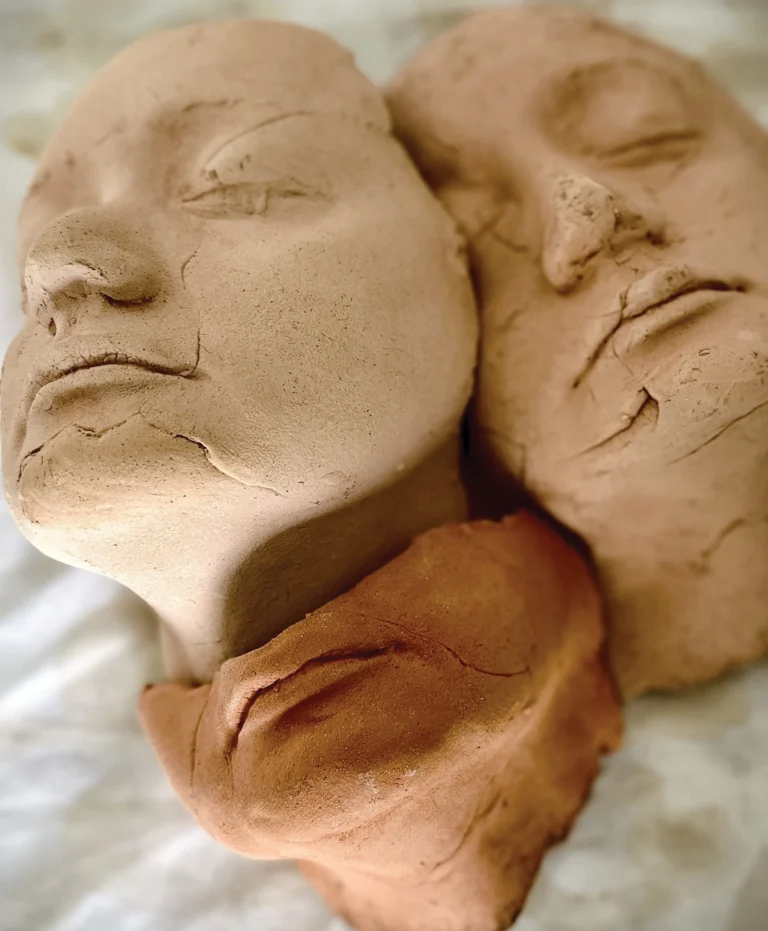


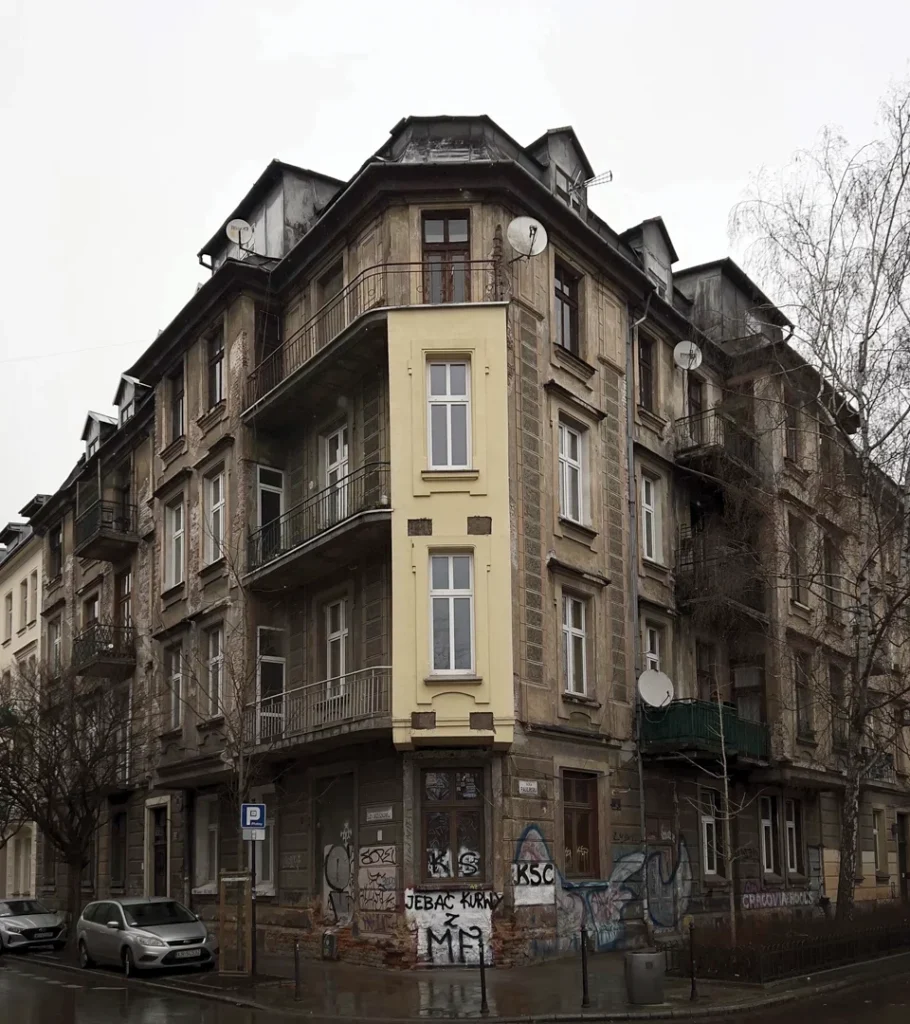
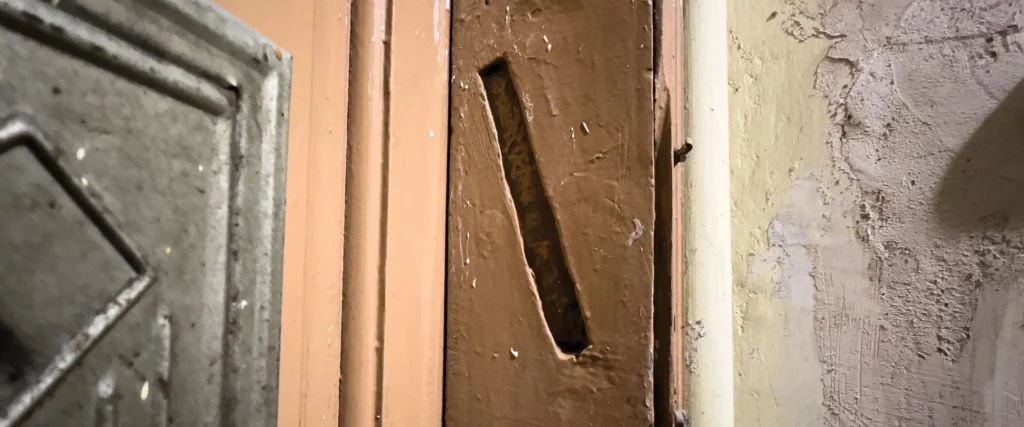
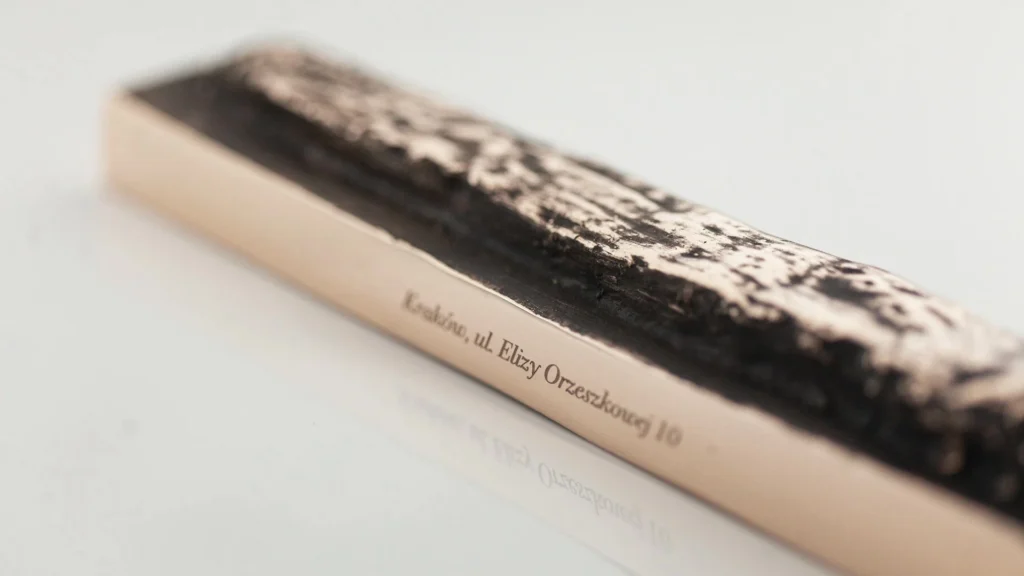
Mezuzah traces are the physical marks, silhouettes or indentations left behind on a doorframe after a mezuzah has been removed. One casting was taken from the former Kraków home of Elias Friedman, a Holocaust survivor who eventually relocated to Orlando. | Courtesy Holocaust Memorial Resource & Education Center
How do we preserve memory? How do we carry stories forward for future generations? These questions are at the heart of the Holocaust Memorial Resource & Education Center’s newest exhibition, Mezuzah Traces: Memory on the Doorposts of Poland.
(The center, now located in Maitland, will become the Holocaust Museum for Hope & Humanity when it moves into its expanded facility near Downtown Orlando in early 2028. See page 39 for details.)
Mezuzah Traces, which runs through late spring, introduces visitors to the work of the Polish-Jewish design studio Mi Polin (which means “from Poland” in Hebrew). Displays include explanations of how the studio locates, documents and preserves the traces of mezuzahs still visible throughout Poland.
Mezuzah, which is also a Hebrew word, means “doorpost” and refers to a tradition in Jewish homes of affixing a scroll of parchment with handwritten excerpts from the Book of Deuteronomy to the doorposts, or doorframes, of their homes.
In Deuteronomy—the fifth book of the Torah and the Christian Old Testament—Jewish people are commanded by God to write His laws “on the doorposts of your house and on your gates.”
Mezuzah traces are the physical marks, silhouettes or indentations left behind on a doorframe after a mezuzah has been removed. These markings serve as physical records of families who were forced to abandon their homes—most notably across Eastern Europe during the Holocaust.
“Behind every mezuzah trace was a family who lived in that home,” says Suzanne Grimmer, the center’s senior director of museum experiences. “Those traces are quiet reminders that vibrant Jewish communities once existed in these places.”
In addition to photographs, personal stories and historical research, the most unique element of Mezuzah Traces is the collection of mezuzah castings created directly from surviving traces—including one taken from the former Kraków home of Holocaust survivor Elias Friedman, who retired to Orlando in 1980 following a business career in New York City.
Representatives from the center visited Friedman’s building during a cultural exchange trip to Poland in May. Says Grimmer: “Sharing this story alongside the original casting creates a meaningful connection between Holocaust history in Poland and Central Florida. It reminds us that these traces represent real people whose lives continued to shape our world.”
Mezuzah Traces is the first exhibition that has resulted from a “Memory Keepers” cultural exchange program between the United States and Poland that builds partnerships with museums, archives and cultural organizations around the world and preserves Holocaust history and Jewish memory in innovative ways.
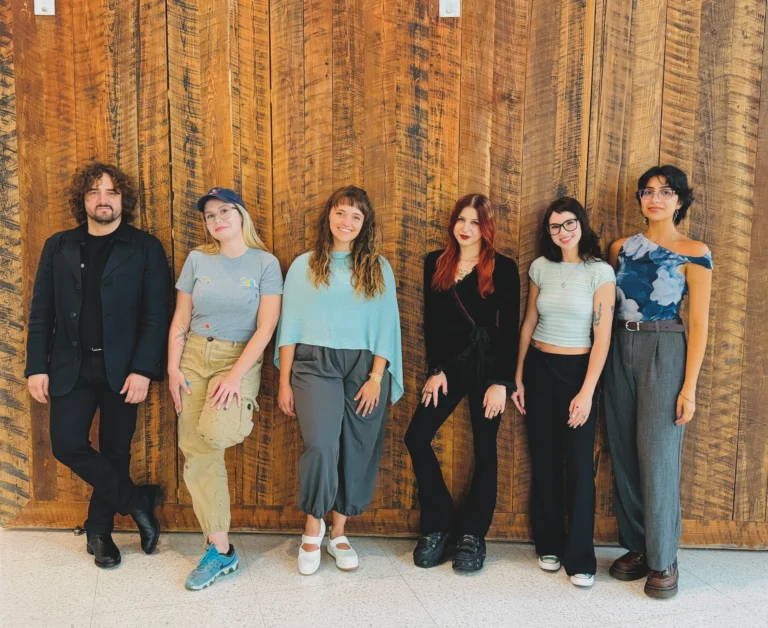
The center will welcome Warsaw-based artists and researchers Aleksander Prugar and Helena Czernek, founders of the Mi Polin Mezuzah Center, on Wednesday, September 16, for an evening with the curators.
The Holocaust Memorial Resource & Education Center is located at 851 North Maitland Avenue, Maitland. For more information, call 407.628.0555 or visit hmrec.org.