

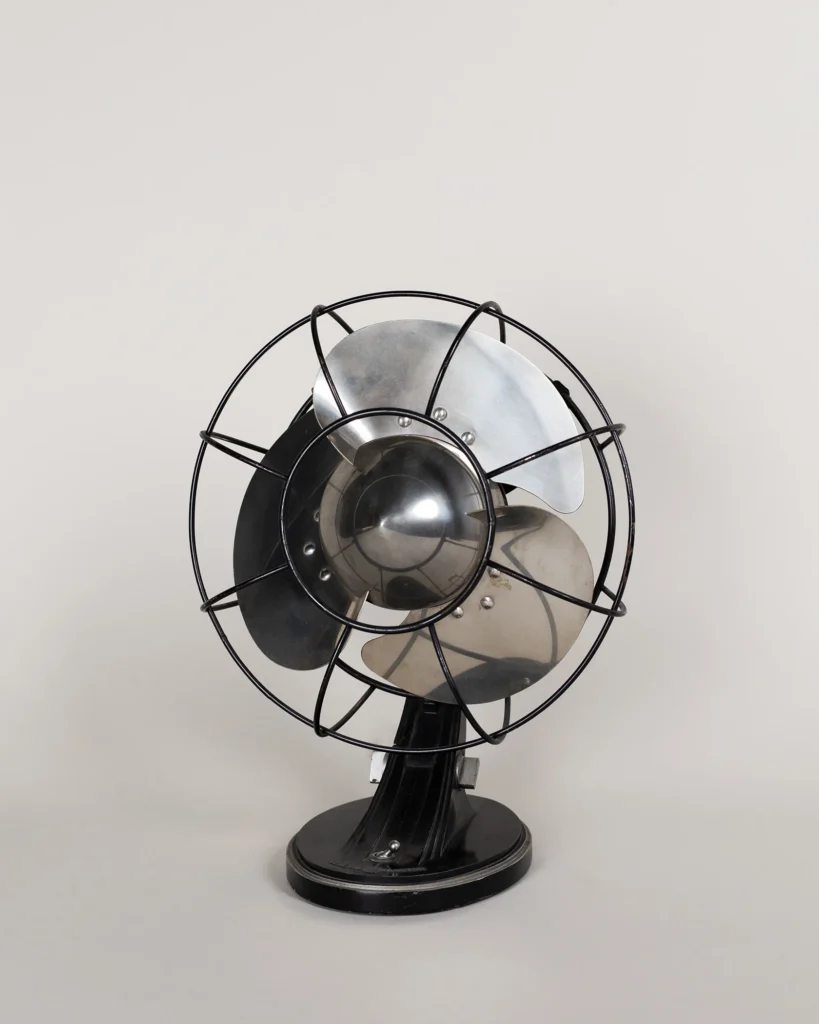
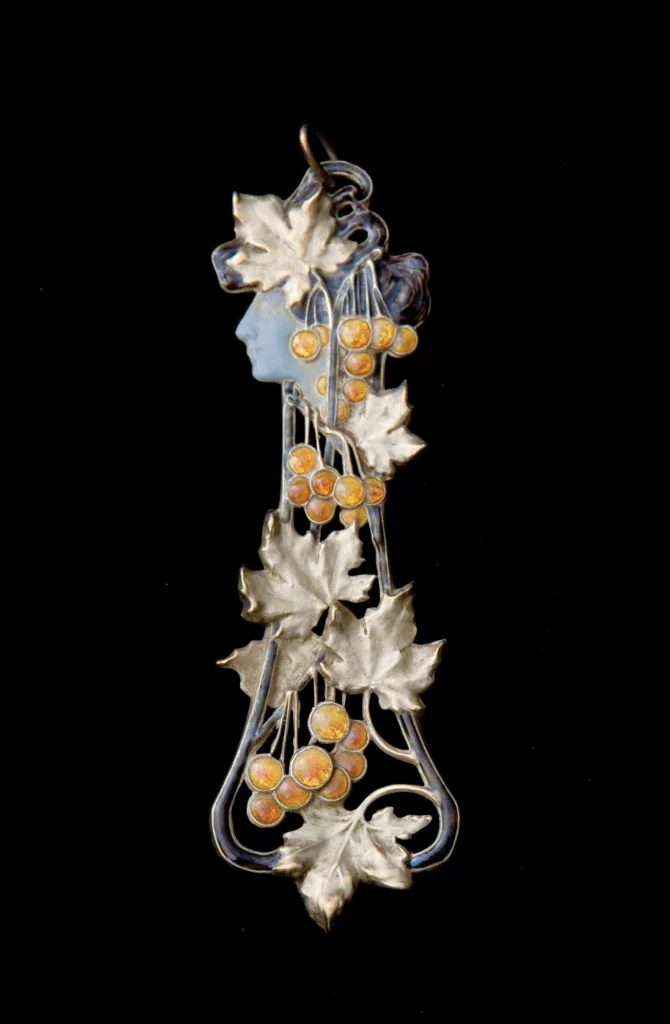
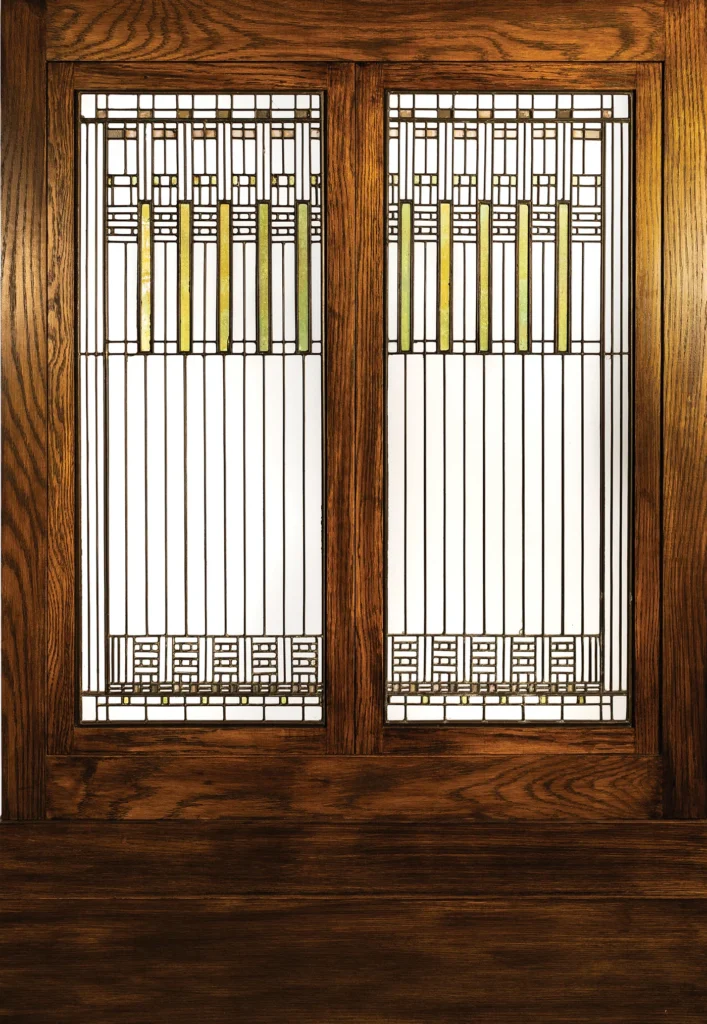
As the appetite for all things Victorian began to fade, artists and designers responded to changing times in a variety of ways. Revolt in the Parlor features such objects as an aluminum bullet-nose fan designed by Joseph W. Gosling; a pendant crafted by René Lalique; and leaded-glass dining room sideboard panels designed by Frank Lloyd Wright. | Courtesy the Charles Hosmer Morse Museum of American Art
When you hear “counterculture,” you might think of hippies of the 1960s, punks of the 1970s or grungers of the 1990s. Victorians of the 19th century? Perhaps not so much.
But Revolt in the Parlor: Escaping Victorian Taste at The Charles Hosmer Morse Museum of American Art just might surprise you. The exhibition traces the evolving currents of art and design from 1895 to 1959 and takes its title (as well as its overarching theme) from a 1969 book by museum co-founder Hugh F. McKean.
Revolt in the Parlor—which opens on Tuesday, October 13—will follow the cycles of experimentation, disruption and reinvention that emerged as creators confronted (and helped to shape) a dramatically changing world as the “fascinating clutter” of Queen Victoria’s time gave way to the burgeoning of the Second Industrial Revolution.
The exhibition is organized into eight sections—each with its own title and icon of the time—told through fashion, furniture, glass, pottery, jewelry, textiles and more from the personal collection of McKean and his wife, Jeannette Genius McKean, granddaughter of museum namesake Charles Hosmer Morse.
The sections each reflect periods that begin with “Discipline” (1890 to 1910), which marked a return to the hand craftsmanship and use of honest materials during the arts and crafts movement. They extend through “Independence” (1950 to 1959), during which art-related changes were prompted by automobiles, superhighways and consumer advertising.
In between, you’ll see representations of the cultural zeitgeist that resulted from historical high points and low points, as creators were challenged to rethink their visual languages when technologies advanced, political tensions destabilized nations and expanding global ambitions spurred territorial disputes and world wars.
“Our founders wanted the museum to be a frequent escape for people to learn about and just enjoy artwork,” says Jennifer Perry Thalheimer, director and chief curator at the Morse. “This exhibition is something different from what we normally do. There’s something for everybody. It’s very relatable.” Thalheimer says she’s particularly excited because since she assumed her role in 1999, the museum has never shown anything created beyond the 1920s.
The Charles Hosmer Morse Museum of American Art is located at 445 North Park Avenue, Winter Park. For more information, visit morsemuseum.org or call 407.645.5311.