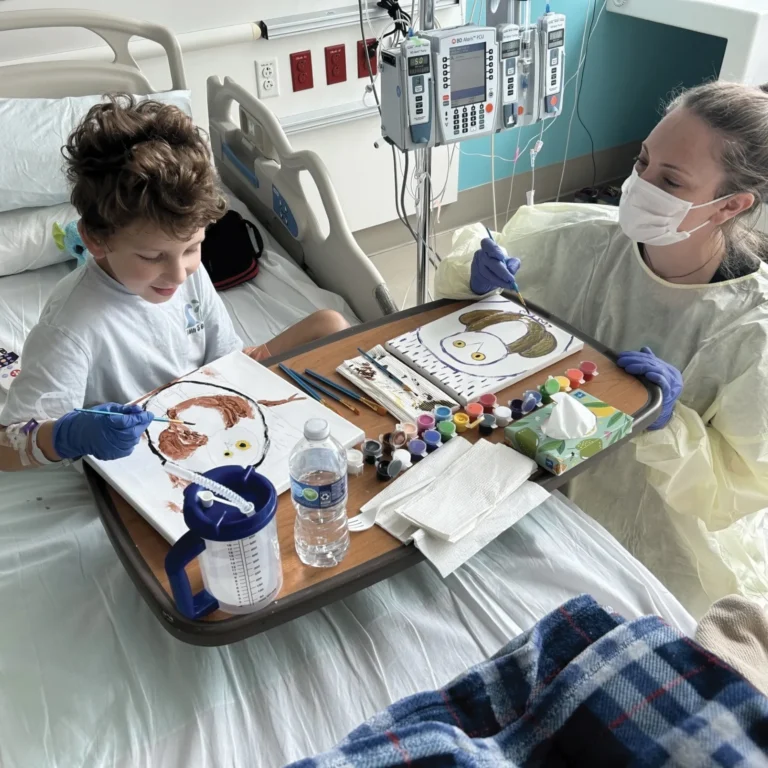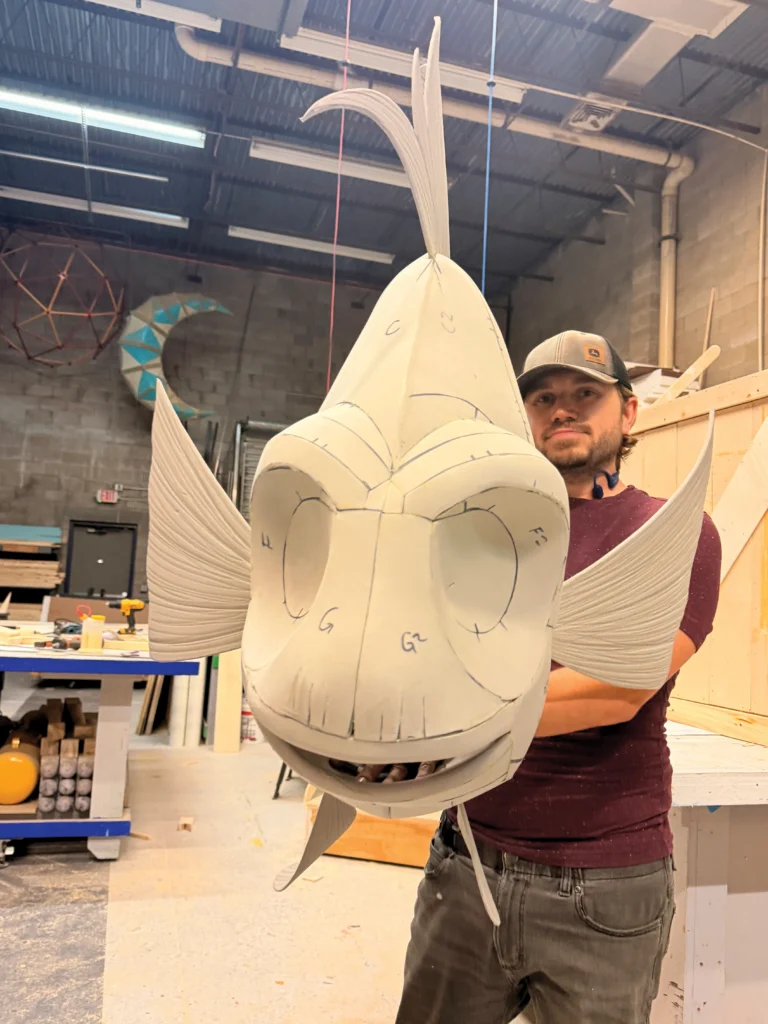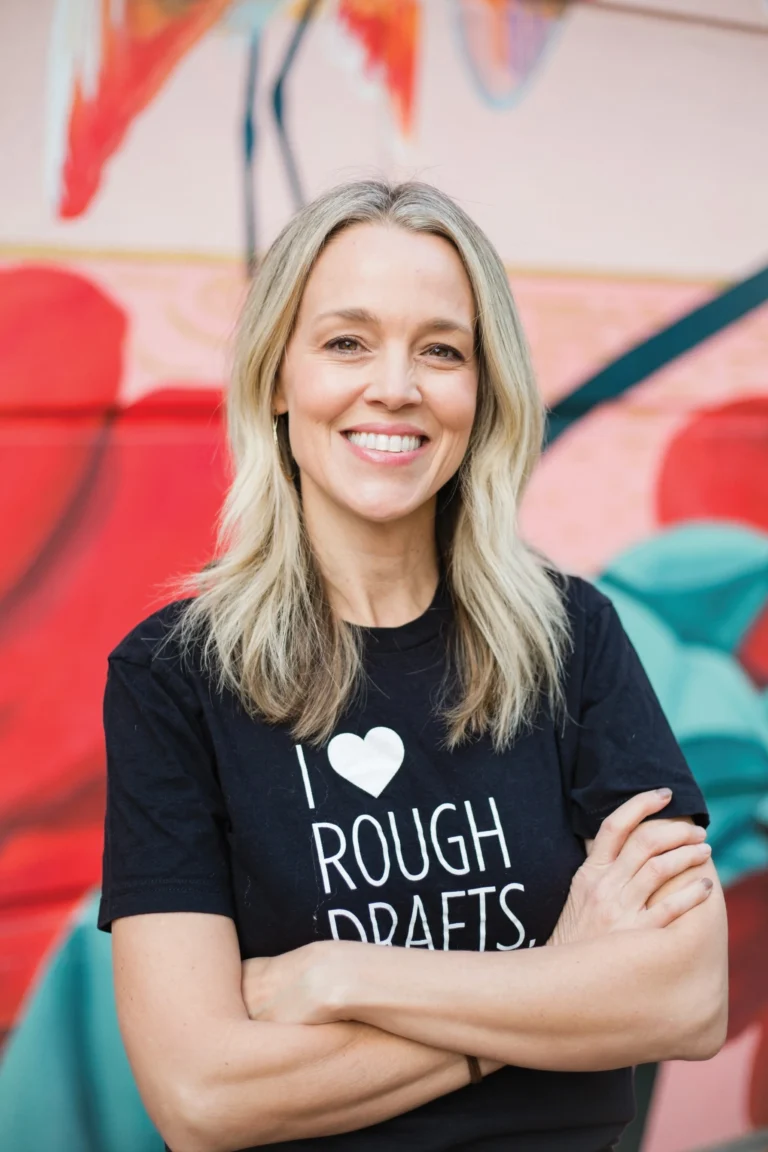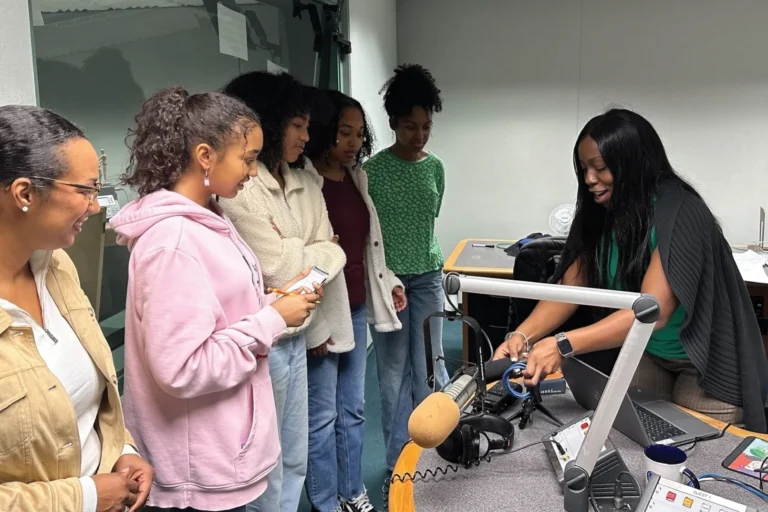


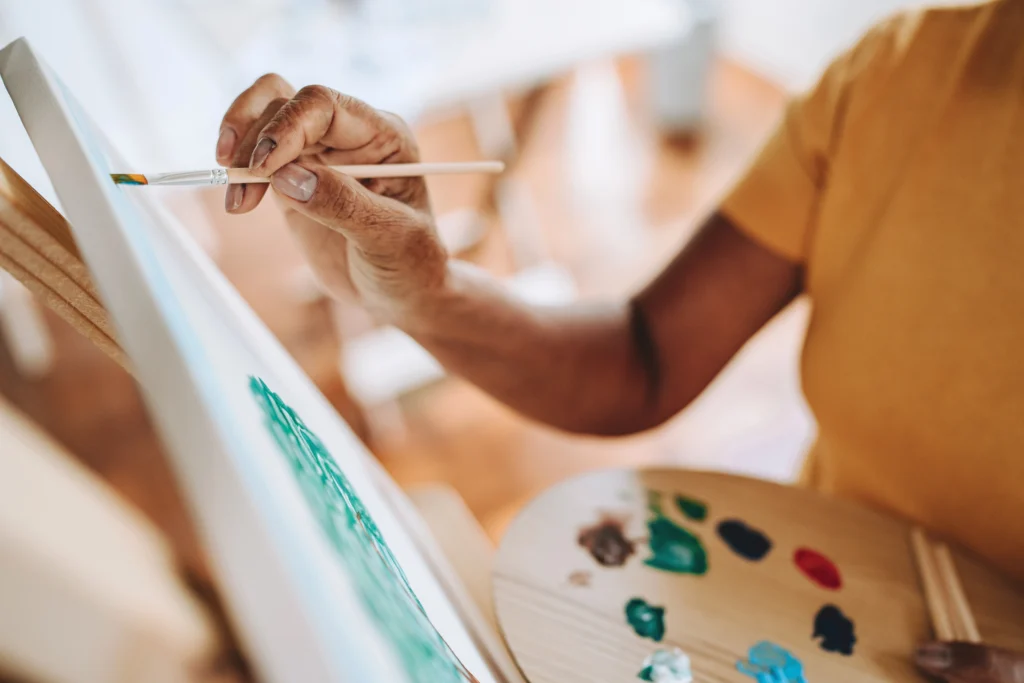
Creative Aging sessions were held over eight weeks at four Share the Care memory-care locations, two in Orange County and two in Seminole County. Each focused on a particular activity—drumming, ceramics, collage and visual poetry, and international dance—and the results were “immediate and tangible upward changes in mood and mobility” among participants. | Courtesy United Arts of Central Florida
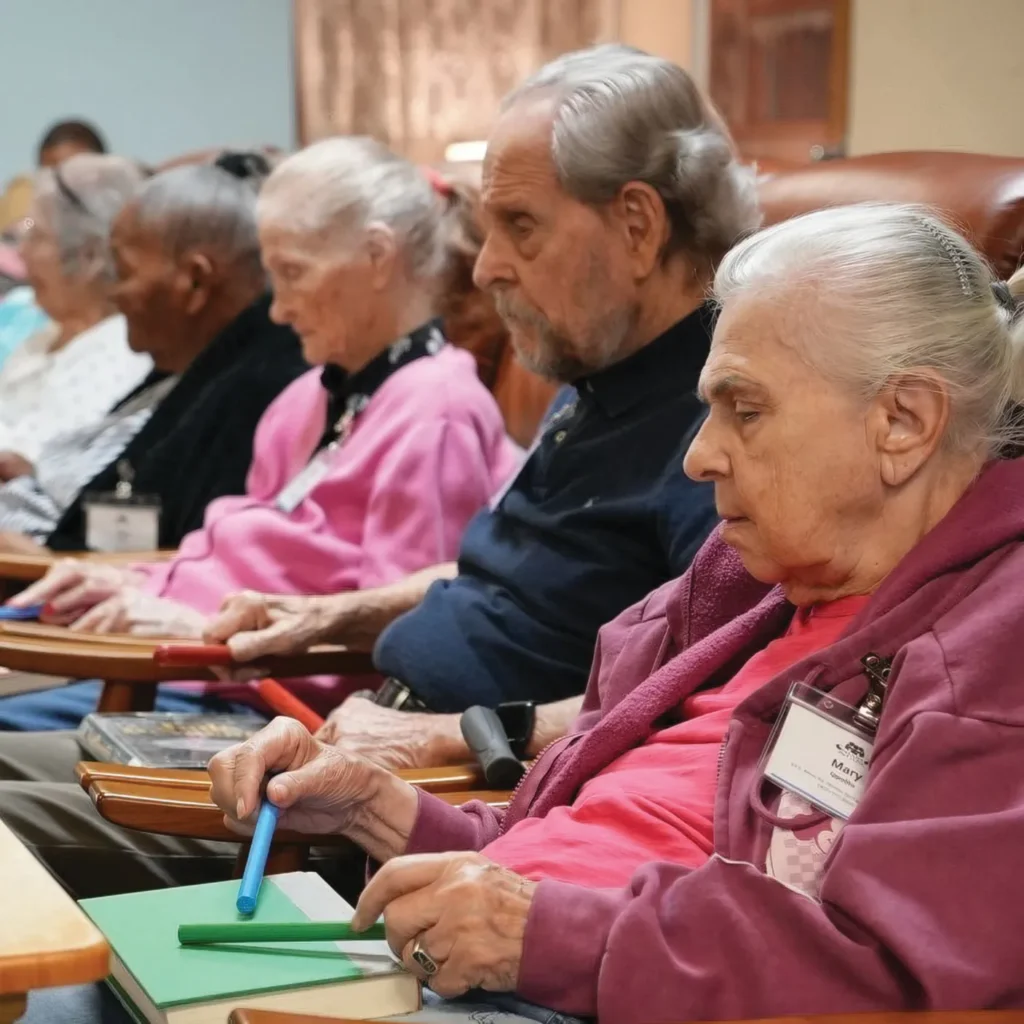
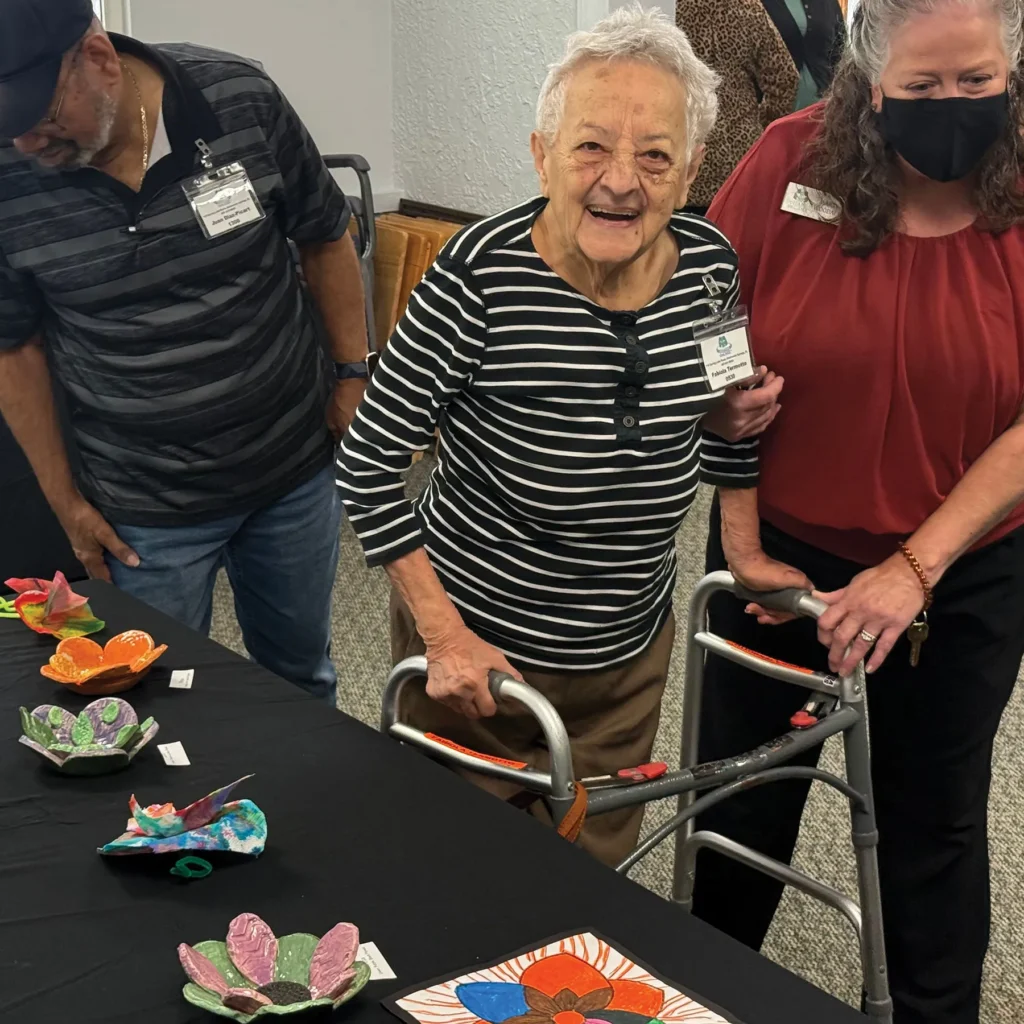
On the Monday before Thanksgiving last year, there was an unusual graduation ceremony held at St. Mary Magdalen Catholic Church in Altamonte Springs. Participants weren’t teens finally free of high school or professionals leveling up their career credentials.
Instead, they were all more than 55 years of age. Some had felt lonely and isolated. Others had such memory and neurological challenges as dementia, Alzheimer’s and Parkinson’s. Several struggled with mobility issues.
The grads—as well as some artists whose work was featured in a special display at Mills Gallery in late January—were part of an eight-week Creative Aging pilot program, which was designed to examine the effect of arts activities on the health and wellness of seniors.
The program was a collaboration between United Arts of Central Florida, AdventHealth, Share the Care and the Senior Resource Alliance. And it had some very specific goals.
First, the stakeholders wanted to demonstrate that exposure to arts activities could quantifiably improve health and quality of life for seniors; and second, they wanted to determine whether or not there was support (including funding) to continue such a program.
Although no decisions were immediately forthcoming, the initial report card boasted top marks all around. Creative Aging’s teaching artists, who were contracted by United Arts to bring programming to four memory care centers, were unanimous in their enthusiasm.
Comments were reported anonymously, but all were positive, such as: “Participants looked forward to each session.” “They shared that they had so much fun.” “Our clients and their families were amazed at the results.”
Creative Aging was first envisioned more than two years ago, but implementation was predicated on answering one crucial question: Why should hospitals or healthcare organizations be involved in the arts?
Data was needed, so the first step was meticulous research conducted by Beatriz Ramirez, outreach program officer for United Arts. Beginning in 2023, she talked to experts and delved into statistics, strategies, trends, books, histories, videos, online toolkits and a range of other informational resources.
Her search included studying the work of, among others, the Johns Hopkins University School of Medicine International Arts + Mind Lab, the University of Florida Center for Arts in Medicine, the George Washington University School of Nursing, the National Assembly of State Arts Agencies, the National Endowment for the Arts and the National Leadership Exchange of the National Center for Creative Aging.
“I began looking into what was already happening in the field of Creative Aging,” she says. “I focused on who the experts were, what programs were being implemented, what research was being conducted and what the impact of those existing programs has been.”
There was plenty of solid evidence to be found. In fact, the World Health Organization had reviewed more than 3,000 studies in 2019 and found that the arts do indeed play a key role in preventing illness, promoting health and helping to manage and treat medical conditions.
An early study from George Washington University had shown that encouraging creativity could support health in profound and sometimes unexpected ways. Subsequent studies demonstrated that listening to music could lower blood pressure, pain and anxiety while boosting mood, memory, learning and focus.
But that’s not all. It was also found that older adults who visited a museum or went to a concert at least once a year were 14 percent less likely to die over the ensuing 14 years. Simply going to museums, in fact, was linked to a lower risk of dementia over a 10-year period.
Indeed, the evidence that had already been accumulated was overwhelming. Clearly, it was time for action—and shifting demographics enhanced the urgency.
An estimated 10,000 Americans turn 65 every day and, by 2050, that cohort will comprise more than 20 percent of the population. When that happens, an estimated 14 million Americans will be living with Alzheimer’s.
Adds Ramirez: “Seeing these numbers helped put into perspective how much our population will change and how impactful arts programming that can meet individuals at various abilities and ages could be.”
Based upon her findings, she identified a need for a participatory art program and the importance of building community around the idea. The result was the pilot program directed by Jennifer Rae Paxton, senior program officer for United Arts.
Creative Aging sessions began in October 2025 and were held at four Share the Care memory-care locations, two in Orange County and two in Seminole County. Each focused on a particular activity—drumming, ceramics, collage and visual poetry, and international dance—and took the physical or neurological challenges of participants into account.
The pilot program—which included 125 seniors—already aligned well with the philosophy of AdventHealth. “Our mission calls us to care for the whole person: mind, body and spirit,” says Sharon Line Clary, senior vice president of community impact and partnership engagement for the hospital system.
Adds Line Clary: “Treating disease is only one element of whole-person care. Joy, hope and connection—which the arts can help provide—are important, too. So we want to expand access to the arts to enrich lives and help people feel whole—both in a clinical setting and outside our hospital walls, in our community.”
In addition, notes Line Clary, the need will only increase as the senior population increases. “That trend is certainly going to continue in the years ahead,” notes Line Clary. “So we’re always looking for innovative ways to help our senior population get healthy, stay healthy and lead full, active lives.”
The Senior Resource Alliance—a clearinghouse for seniors and their caregivers, as well as others in the field of eldercare—was drawn to the project’s emphasis on cooperation and collaboration.
“The arts are very effective at combating social isolation, depression and anxiety,” says Karla Radka, the alliance’s president and CEO. “Research has shown the positive effect that art can have on older adults. And by bringing this class directly to them, we make it easier for them to access those benefits.”
The arts have physical advantages beyond the psychic satisfaction of creating something. Consider the making of pottery, suggests Radka: “It’s about movement. Many seniors have trouble opening medicine bottles. Pottery helps with dexterity in their hands.”
Like Radka, Line Clary believes that cooperation between agencies can boost their effectiveness: “The arts are a key element in our care philosophy, and that cross-sector partnership helps us infuse the arts into our facilities and our community.”
AdventHealth’s hospitals, for example, are filled with artwork, which helps facilitate a calming and healing environment. Music therapists offer hope and healing during hospital stays.
Line Clary adds that the hospital group also participates in such clinically focused outpatient arts programs as Strokestra, which provides musical therapy for patients recovering from strokes. And it supports arts programming to ensure greater access.
Is there a future for Creative Aging? Nothing is definite yet, says Paxton. But she’s hopeful because of the results, which included personal bonds between seniors and artists and “immediate and tangible upward changes in mood and mobility” among participants. Most of all, she adds, the sessions were fun.
La Donna Royal, the Share the Care director at Grace Covenant Presbyterian Church in Orlando, likewise reports that the “music and dancing were universally relatable. The smiles and joy that come from it are universally understood and positively infectious.”
Melanie LaJoie, who taught bilingual world dance there with business partner Wanda Velez, adds that the program “was above and beyond our expectations.”
Adds LaJoie: “Wanda and I had heartwarming experiences (and) La Donna and the staff were so accommodating and helpful. The members were very receptive and wanted to join in for fun and laughter. For them, it was evident that it was a lighthearted experience.”
Visit UnitedArtscfl.org for more information about how to support and encourage the continuation of Creative Aging.