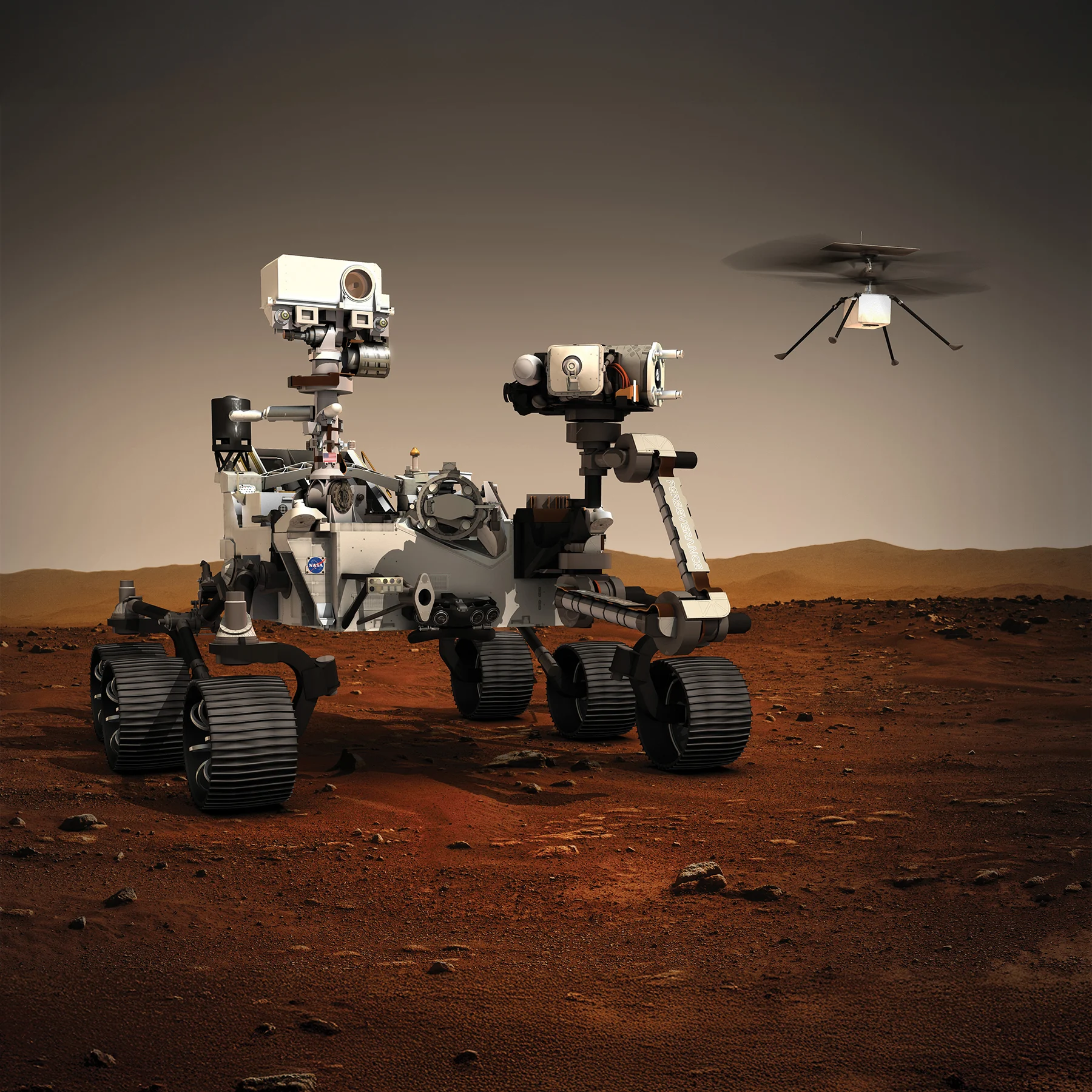


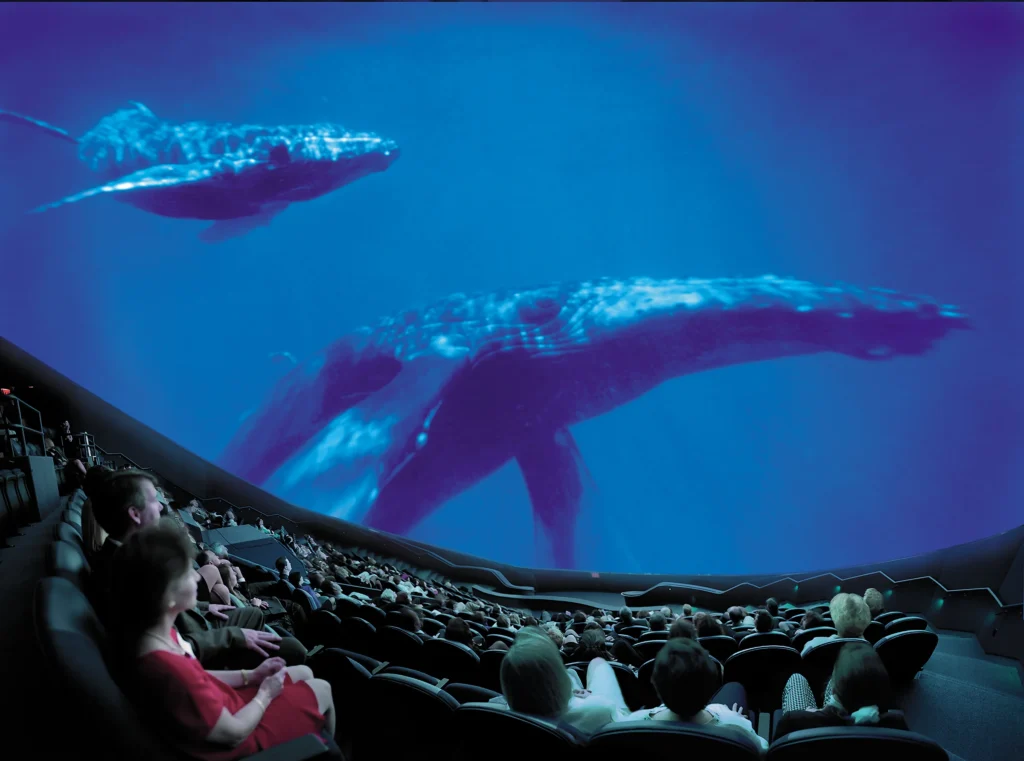
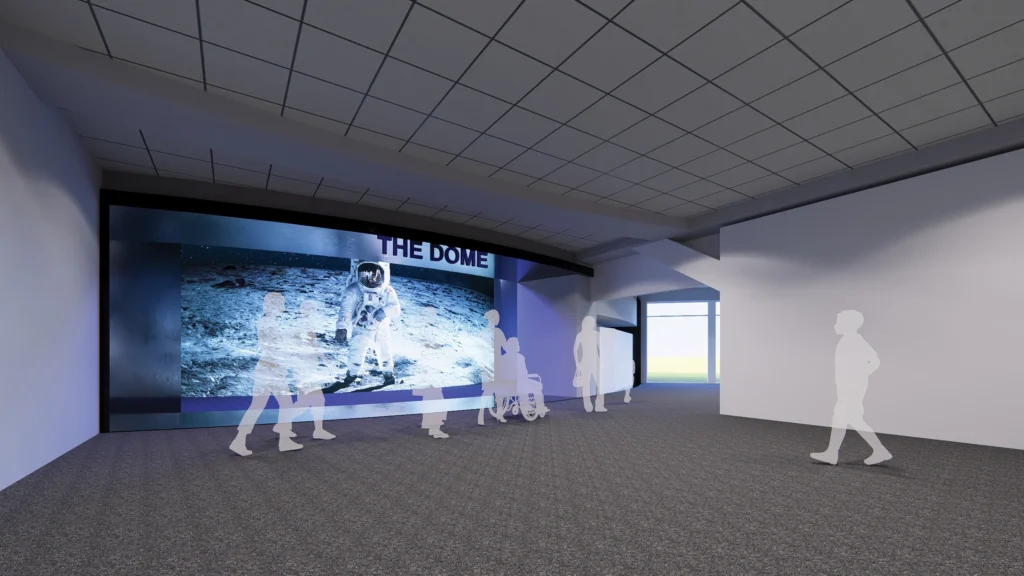
The Dome by Dr. Phillips Charities—slated to reopen this spring—will feature a new domed screen, an immersive high-fidelity audio system, larger more comfortable seats and an 8k full-dome laser projection system. | Courtesy Orlando Science Center
Science doesn’t stand still. But sometimes you have to look back to build a better future. That’s the situation for Orlando Science Center’s reimagined dome theater formerly known as the CineDome. The retrofitted eight-story space—slated to reopen this spring—will feature a new domed screen, an immersive high-fidelity audio system, larger more comfortable seats and an 8k full-dome laser projection system with up to 10 projectors placed strategically throughout the theater.
Dr. Phillips Charities kicked in $1 million, which came with naming rights to what will now be known as The Dome by Dr. Phillips Charities. It’s the centerpiece of OSC’s “Unlock Science” campaign, which also includes a range of updates, classroom spaces, enhanced exhibitions and a new KidsTown.
Since OSC’s CineDome opened in 1997, visitors have watched giant reels of film loaded into an Iwerks projector in a glass-enclosed, climate-controlled room on the facility’s ground floor. The projector would glide upward 18 feet to reappear in a central location among the theater seats to start the show.
It was all very cutting edge nearly 30 years ago. Soon, though, the reimagined Dome will rocket this part of the museum back to preeminence in the universe of science center planetariums, says Jeff Stanford, vice president of marketing at OSC.
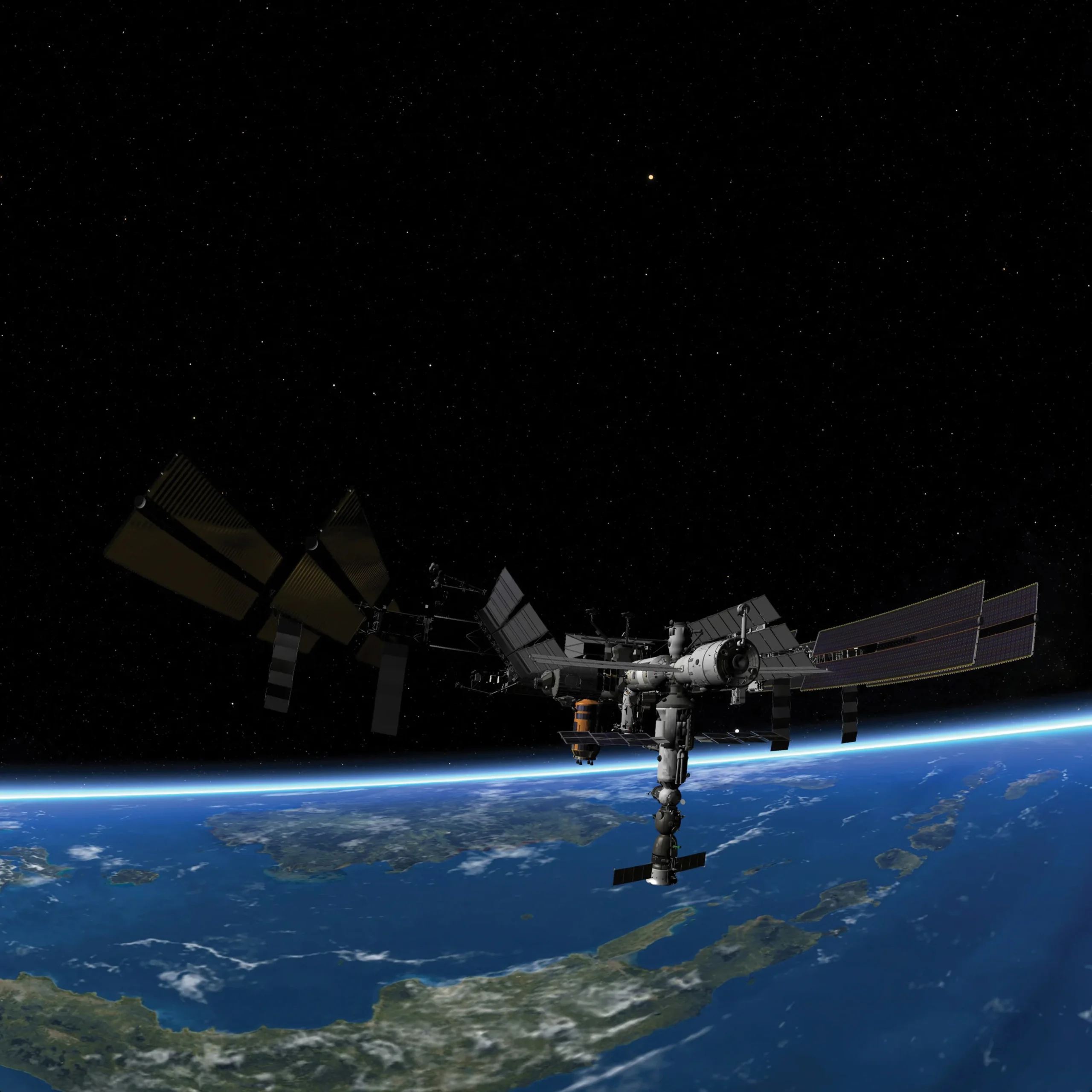
“[The Dome] can take you to the edge of the galaxy and beyond,” he adds. “It can show you the night sky when you were born, or from your wedding day or the night sky over Orlando. It can transport you to the next solar eclipse.”
There’s so much more—but to understand this project’s significance, we must consider its history. When the first iteration of what would later become the science center opened in 1960, it was a museum of artifacts that occupied the building that’s now home to Orlando Shakes.
The focus shifted to science in the early 1970s, and the facility was renamed the John Young Museum & Planetarium in honor of homegrown astronaut John Young. The original building was expanded in the early 1980s and rebranded as Orlando Science Center. Notes Stanford: “The theater in the round at Orlando Shakes was our first planetarium.”
When OSC moved to its current location in Loch Haven Cultural Park, the state-of-the-art, 300-seat theater was its biggest attraction. The tilted dome screen—79 feet in diameter—showed immersive, giant-screen films such as Dolphins, Everest and Living Seas. Eventually, however, the technology became outdated.
“The CineDome was one of the last giant-screen theaters in the United States still using film projection,” says Stanford. Renovation was off the table because the equipment was challenging to maintain and the parts—if they could be found at all—would have been prohibitively expensive. Plus, there were no new films being produced for projection systems.
“That technology basically doesn’t exist anymore,” notes Stanford.
Some of those classic, early flicks got a second shot at glory during the CineDome’s “farewell tour” last August. Theater Director Amy Quesinberry, who was part of the crew that opened the now-outmoded venue, came back and operated the projector for one last run. Demolition started a week later.
And there’s more. In addition to showing movies, the new theater will be able to host laser shows and mixed-media events that combine live performances with animated or live-action images on-screen.
Projectors will be connected to the internet, basically turning the screen into a massive web browser to accommodate anything from lectures by experts to student media presentations and ultimately to “dome-cast” content from other venues around the globe. Heck, if it chose to, OSC could even show the hottest new films from Hollywood.
“This makes us incredibly adaptable,” says Stanford, who adds that OSC is also considering production and distribution of its own content.
An entirely new lobby—one that will feature screens playing previews of current or upcoming films—will round out the project.
And, for the first time, there’ll be a concession area. Says Stanford: “We’ll have everything from popcorn, candy and soda to ice cream, complete with toppings.” The necessity of such amenities proves that, although technology may advance, some aspects of the moviegoing experience must remain decidedly old-school.
The film lineup hasn’t been finalized yet, but Stanford promises shows that will be mind-blowing, especially the planetary offerings, and will be light years ahead of what you might have experienced back in the day at the old CineDome.
“The big, immersive, explosive sound will transport you to another place,” he says. “And that’s in keeping with the mission. That’s where the real magic happens as we lead people down the path of expanded learning.”
Orlando Science Center is located at 777 East Princeton Street, Orlando, in Loch Haven Cultural Park. For more information, call 407.514.2000 or visit osc.org.
OSC promises shows in the new Dome that will be mind-blowing, especially the planetary offerings, and will be light years ahead of what you might have experienced back in the day at the old CineDome. | Courtesy Orlando Science Center