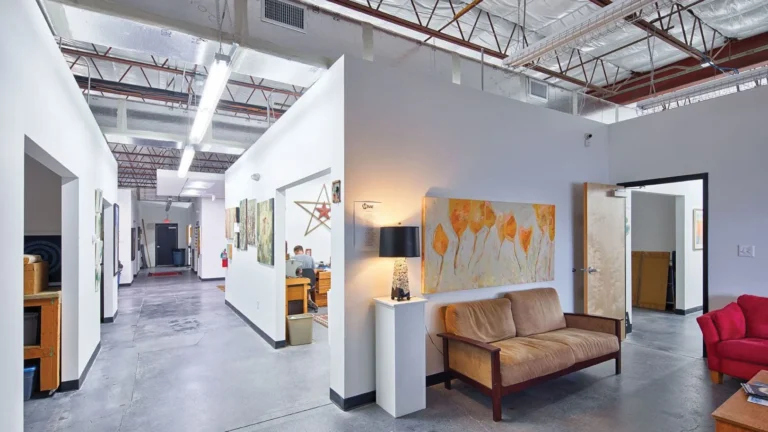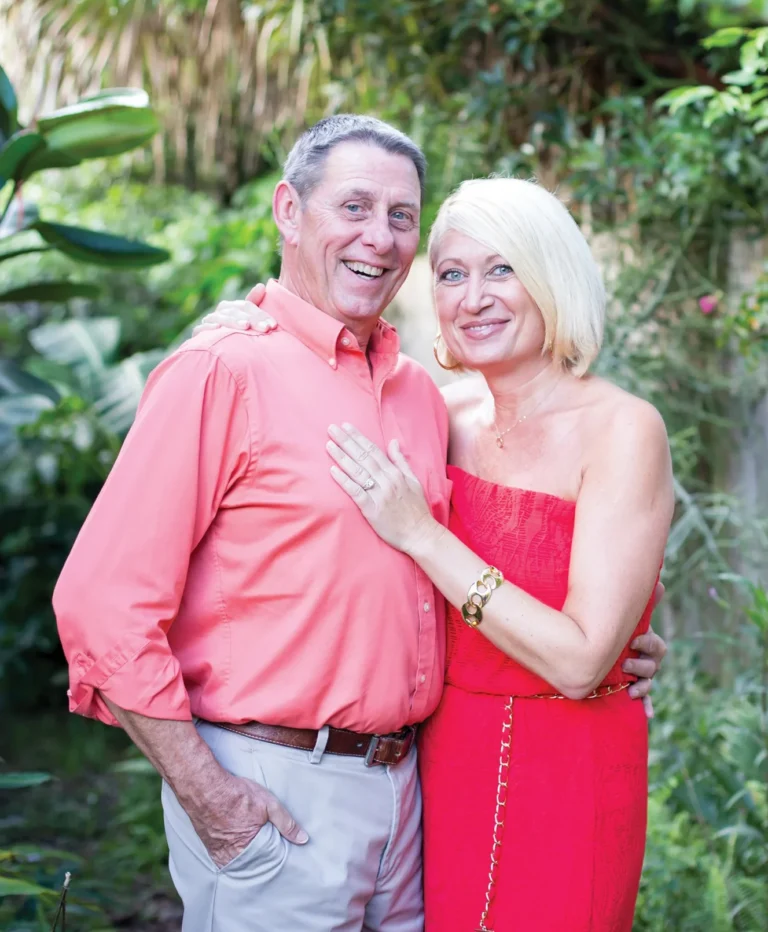


Ryan Young wanted to shake things up on West Church Street. Parramore Arts, a 24/7 “gallery without walls” outside Interstruct, his design-build firm headquartered squarely within the West Church Corridor, needed something new and different—something with sizzle.
Says Young: “It came from the idea of wanting to provide a free public art installation for Interstruct’s own redevelopment project in Parramore.” Young and Pat Greene, a well-known local curator, had been batting around ideas for months. Then, while in Miami, Young saw an art project that had been installed within a lighted container.
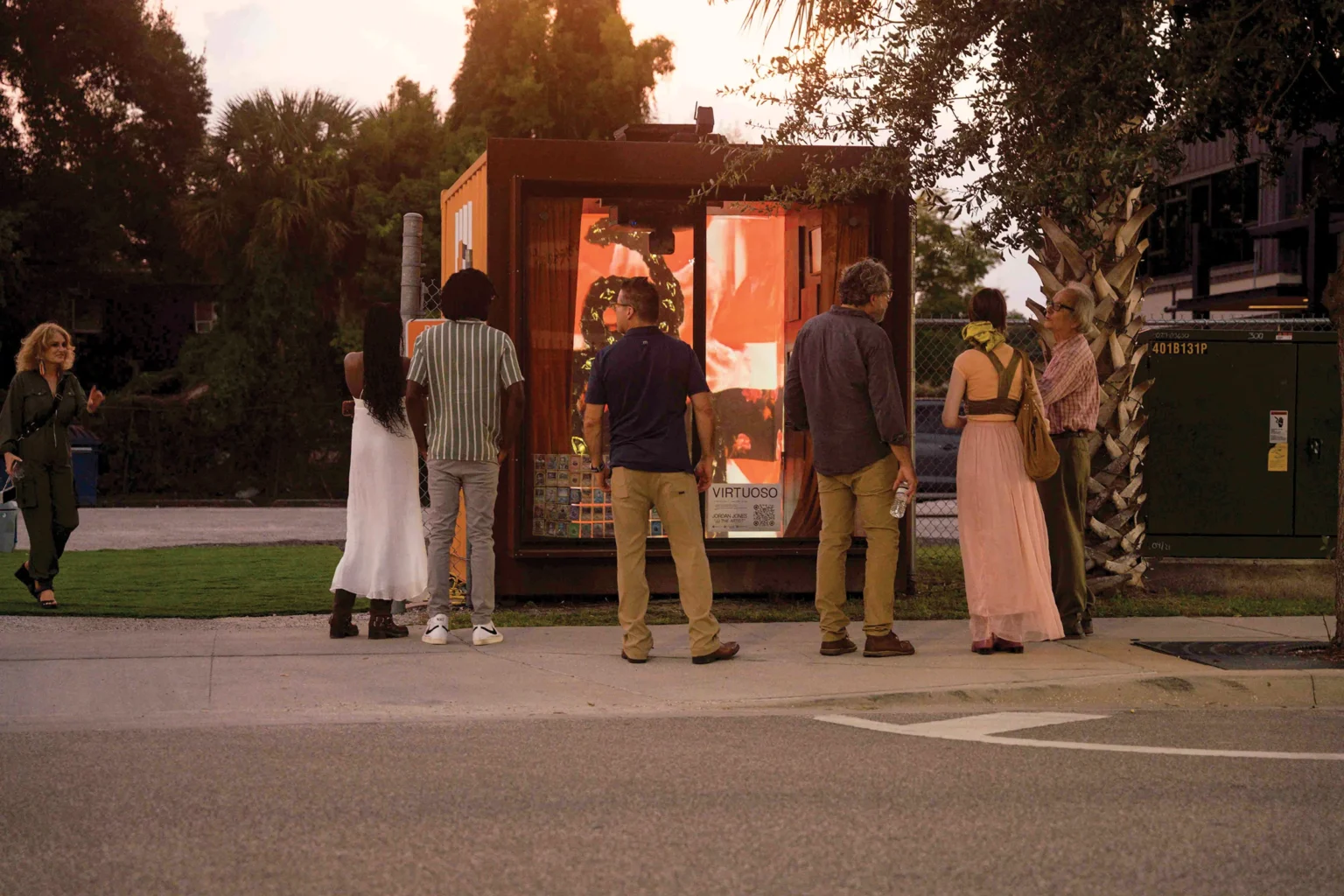
It was a pretty cool idea, thought Young, who procured an 8-by-10-foot steel shipping container that he fitted with a glass front and mounted on a concrete slab. He then equipped the structure with lights, sound, video projection and digital mapping equipment.
He called this air-conditioned micro-gallery—which is an innovative convergence of fabrication, technology and placemaking—the ArtCube.
Nothing about it came as a surprise to Greene, who says his friend “has always been into the idea of how public art should evolve—he wanted it to be a spectacle.” The first ArtCube exhibition, by local artist Anthony Darby—best-known in the art community as “Dawrby”—premiered in May 2023.
Since then, Young has gotten his wish: a street-facing digital gallery that brings immersive, time-based art into the public realm. Creators rotate through on a regular basis, displaying works that include video, sound, sculpture and multimedia pieces. There’ve been 11 installations so far, with some attracting hundreds of people to opening-night receptions.
For those gatherings, Young provides a free shuttle from CityArts (the signature gallery of the Downtown Arts District) in conjunction with that organization’s Third Thursdays.
At openings, spectators can hear from the artists and see and feel what’s happening inside the unorthodox little venue, which serves to democratize access to public art, support community identity and promote cultural equity.
Greene, who co-curates the unusual space with Young, is particularly tuned in to the experiential nature of the ArtCube. “We wanted to have art that’s just really different from other public art,” he says. “I hope it becomes sort of a destination. Hopefully, it will make people think about new ideas.”
One goal, adds Greene, was to make the art on display accessible but intriguing. (Outside the box, if you will.) He continues: “We wanted it to be a place where people are a little surprised. It’s like a relationship. You want to keep it interesting.” Indeed, the ArtCube invites interaction, with nighttime activation allowing safe, lively use of the sidewalk area beyond standard business hours.
Peterson Guerrier, a noted local artist, photographer and muralist, agrees. “You see people stop, talk, ask questions and take pictures,” he notes. “But more importantly, they feel something. That’s the goal—art that sparks dialogue; art that moves from observation to participation.”
Guerrier’s project Seats of Solitude—which was on display last winter, explored the often-overlooked experience of people who regularly ride public buses. He says: “When I built that bus inside, I wasn’t just creating a sculpture; I was giving motion to stories that often stand still. It was a way of saying, ‘This community moves, and we move together.’”
Artists connected to Parramore have a particular relationship to the ArtCube. Adds Guerrier: “They understand that this space carries layers of history, resilience, struggle, pride and creativity. It’s not just a box to decorate; it’s a container of possibility. It asks artists to think beyond the expected; to stretch their imagination but stay rooted in truth.”
The chance to see the next ArtCube installation is on Thursday, January 15, when there’ll be an opening reception and a viewing of a multimedia project by Kenyan-born visual artist and UCF professor Njeri Kinuthia. (If you miss the opening, the work will be on display through March.)
Like at a previous event last October, this one will be a double-header—Version 2.0, as Interstruct calls it—that will include a U-Haul pop-up gallery that will be on view on opening night only.
Ultimately, Young would like to spread the ArtCube concept to other municipalities, and he’s excited about the possibilities. “The concept is big,” he says. “But we can replicate it in other cities. The common thread [of the installations] is history and context—and that can be easily done in other places.”
Like the prototype, another location would need power and cell service. Someone also would have to curate the art—but otherwise ArtCube is pretty much plug and play.
“The ideal situation would be a community eager to do thoughtful installations,” notes Young. “Cities that are doing similar work to what we’re doing in Parramore. Cities that are versatile and actively engaged in having those conversations.”
You can visit the ArtCube outside Interstruct’s offices at 814 West Church Street, Orlando. For more information, visit parramorearts.com or artcube-gallery.com.
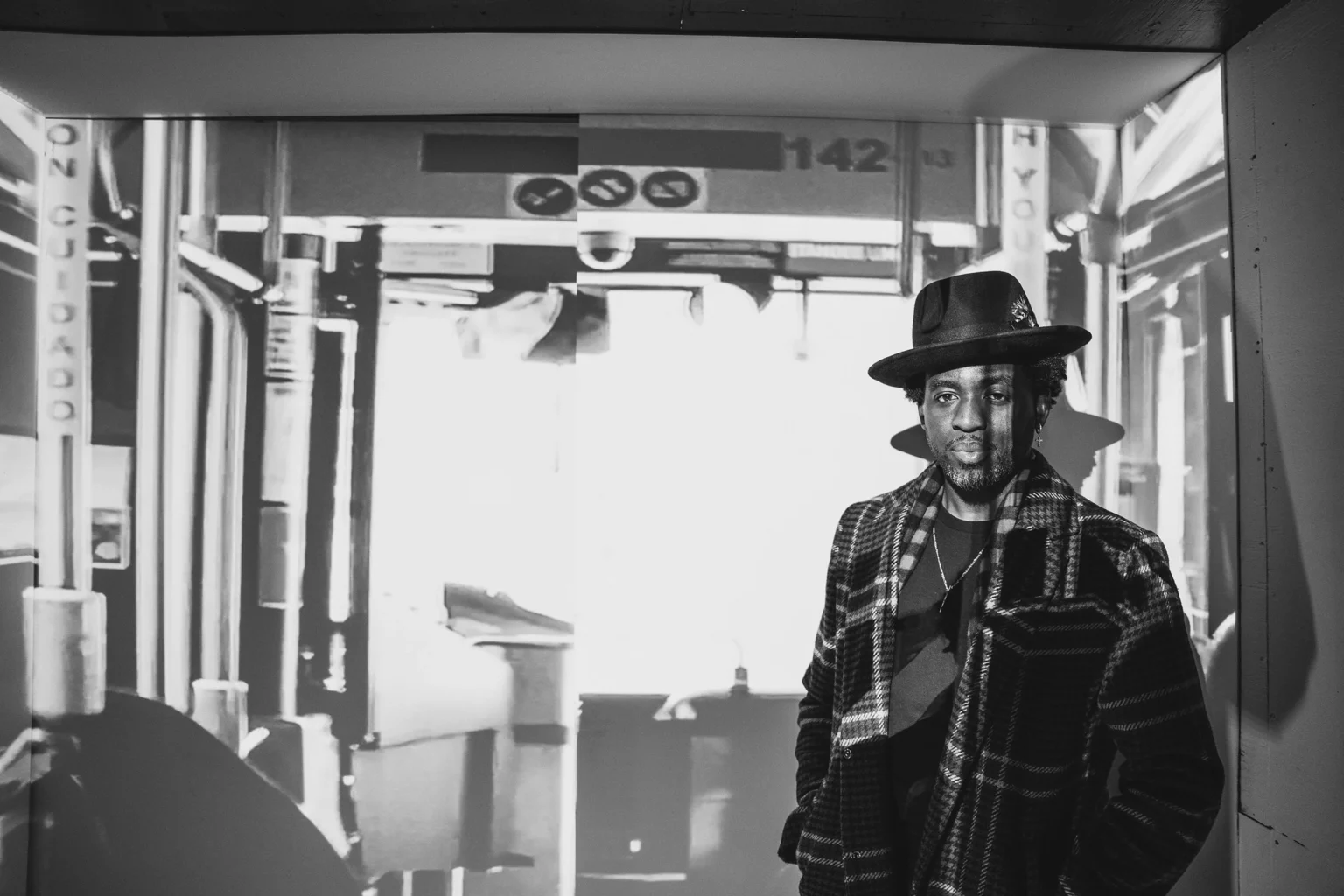
Peterson Guerrier (above), a noted local artist, photographer and muralist, replicated the interior of a city bus inside the ArtCube for his Seats of Solitude project. “I wasn’t just creating a sculpture; I was giving motion to stories that often stand still,” he says. “It was a way of saying, ‘This community moves, and we move together.’” Whatever is on display, the ArtCube (below) attracts attention—especially when it’s lit up at night..