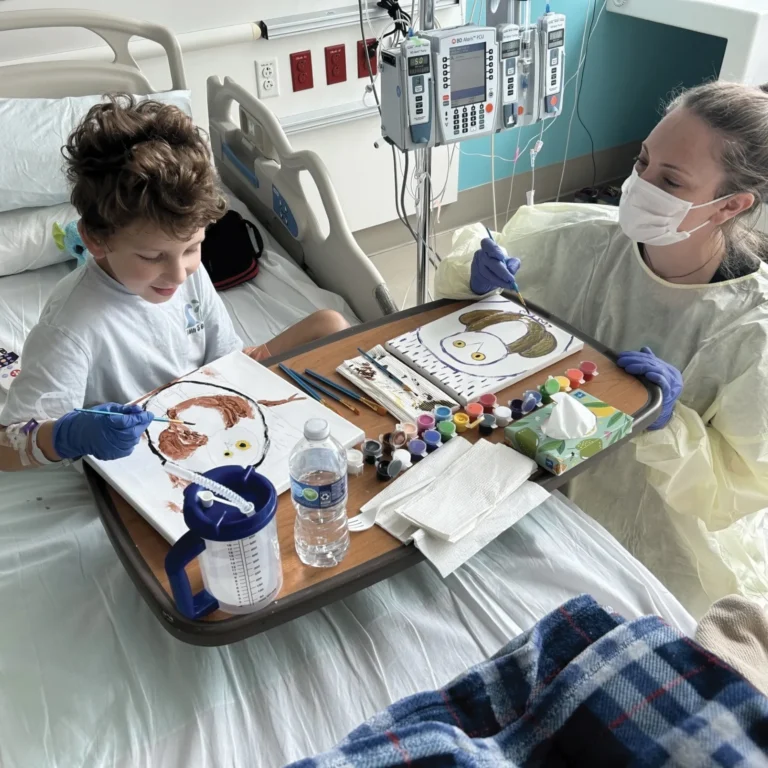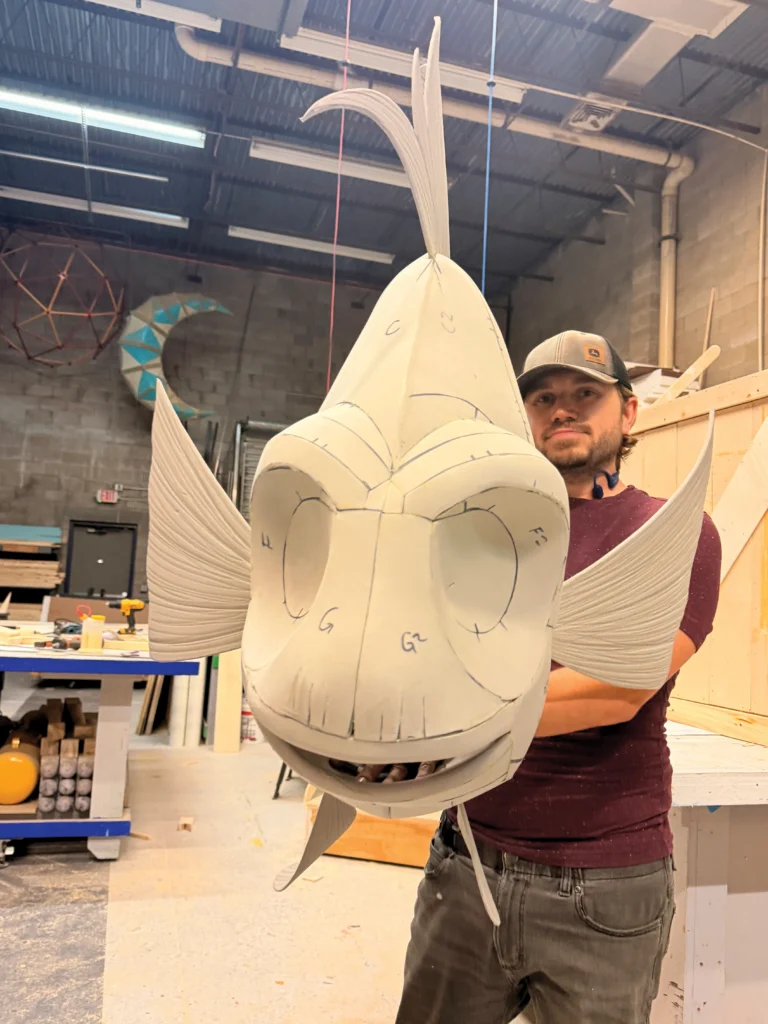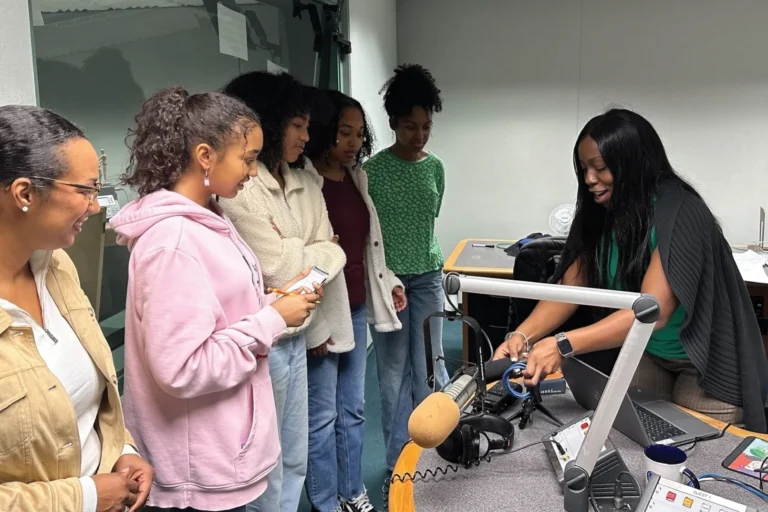
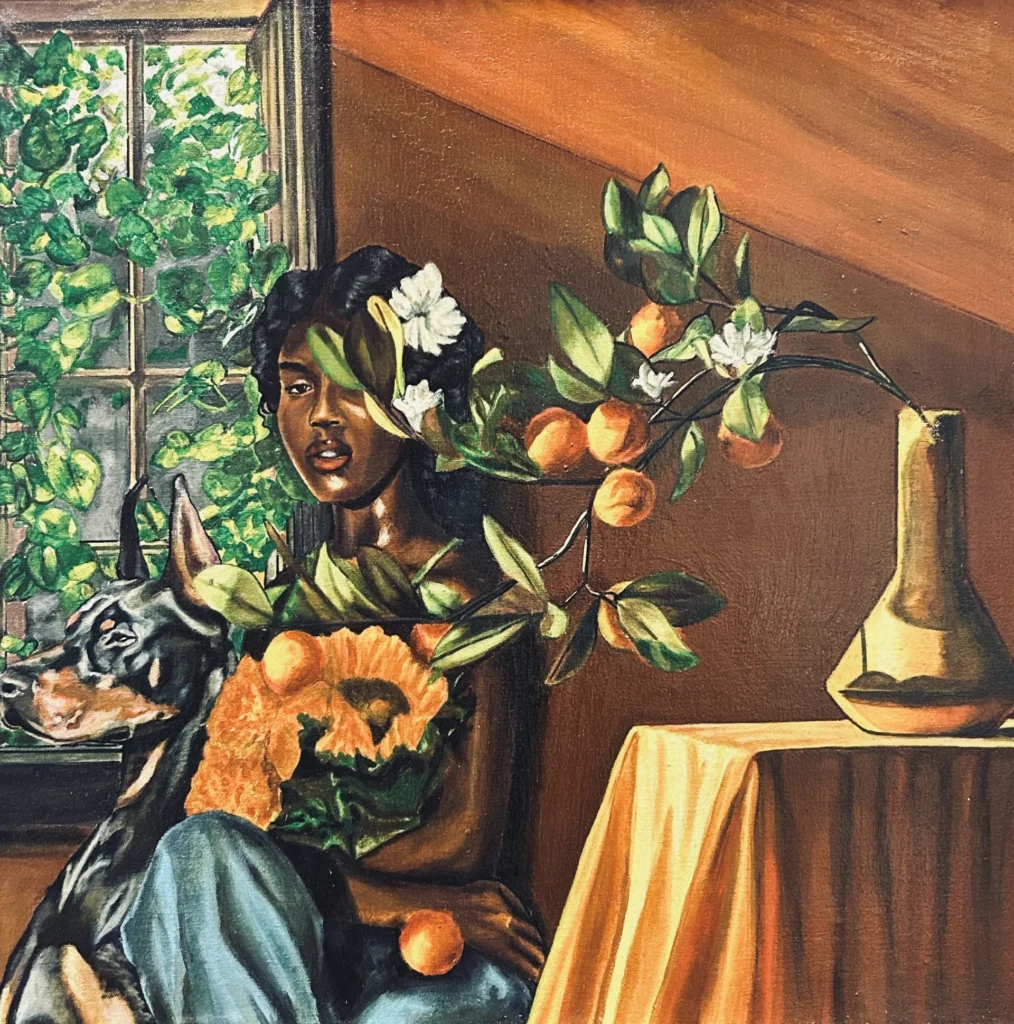
A particularly striking work by one of the artists participating in the City of Orlando’s multifaceted Art Pollination project is this untitled painting by N. Carlos Jefferson, which will be displayed as part of an Art Pollination: Local Artists Exhibition at the Terrace Gallery, Orlando City Hall, from November 7 to January 26. | Courtesy the Artist
Nearly three years ago, City of Orlando Mayor Buddy Dyer paired his Chief Service Officer Marcia Hope Goodwin and Mennello Museum of American Art Executive Director Shannon Fitzgerald and tasked them with an important mission.
The Bloomberg Philanthropies Public Art Challenge—which brings together artists and community partners to develop innovative, temporary public art projects that address important civic issues in their cities—was accepting applications for $1 million grants. And Dyer wanted one for the City Beautiful.
Goodwin and Fitzgerald got to work immediately to find a source of inspiration. They knew other cities had submitted proposals that included the environment, crime rates and public health. So the first potential topics that the duo mulled over were homelessness and transportation—both of which are vexing issues locally.
But when they consulted Mary Stewart Droege, a project manager for the Orlando Downtown Development Board and an expert in urban planning and food insecurity, they knew that they had found their cause.
Although the problem doesn’t get as much ink as it should, the fact is roughly 1 in 7 people in Central Florida are food-insecure. Orange County alone has 16 USDA-identified “food deserts”—areas where fresh food is not available.
It quickly became evident that the topic would be as impactful to the community as it would be inspirational to the artists and partners involved. Orlando’s idea, Art Pollination: Building Food Justice through Creativity, was one of just eight selected out of more than 150 submissions from around the country.
“I think it’s been very intentional how this project has evolved, and it really is celebrating what’s unique to Central Florida,” says Fitzgerald. “It’s called Art Pollination because of cross ideas and cross disciplines—and many of the artists are designing work very specific to what’s indigenous here.”
The initiative has taken the city by storm, highlighting impactful work being done to raise awareness of food insecurity. As an activist, educator, artist and beekeeper, Juan William Chávez was uniquely suited to serve as lead artist.
Chávez was joined by a team of other visual artists and assorted creatives including Alexis Collum, Roxana Cousino, Kelly Delaney, Tasanee Durrett, Harrison Foreman, Nathania Guerra, Peterson Guerrier, Ha’ani Hogan, N. Carlos Jefferson, Emily Johnson, Christopher Jones, Marquis Lee, Delia Miller, Mado Smith, PJ Svejda, Sinuhé Vega Negrin, Justin Skipper and the team of Shree Chauhan and Gina Tyquiengco.
Also part of the effort were renowned choreographer Emily Johnson along with former Orlando Poet Laureate Shawn Welcome. A highly credentialed curatorial jury of arts professionals chose each participant.
The jury included Amy Galpin, executive director and chief curator, Museum of Art and Design, Miami Dade College; Joanna Robotham, curator of modern and contemporary art, Tampa Museum of Art; Azela Santana, executive director, Orange County Regional History Center and the Historical Society of Central Florida; and Keri Watson, associate professor of art history and assistant director, School of Visual Arts and Design at UCF.
Other collaborators included various city departments and such food-related nonprofits as Black Bee Honey, 4Roots, Hebni Nutrition Consultants, IDEAS for Us and Second Harvest Food Bank of Central Florida as well as an academic partner: the University of Florida’s Institute of Food and Agricultural Sciences in Orange County.
Collaborators from the cultural community included the Downtown Arts District, FusionFest and, of course, the Mennello. “I think everyone was up for the task and rose to the occasion,” adds Fitzgerald. “These artists had experience addressing complex issues in a positive, meaningful and community-oriented way.”
Murals were installed in early September to kick off a five-month calendar of signature events and art exhibitions. The 11 works, in the Parramore District, span a six-block radius, beginning at the Kia Center and stretching to Lake Lorna Doone.
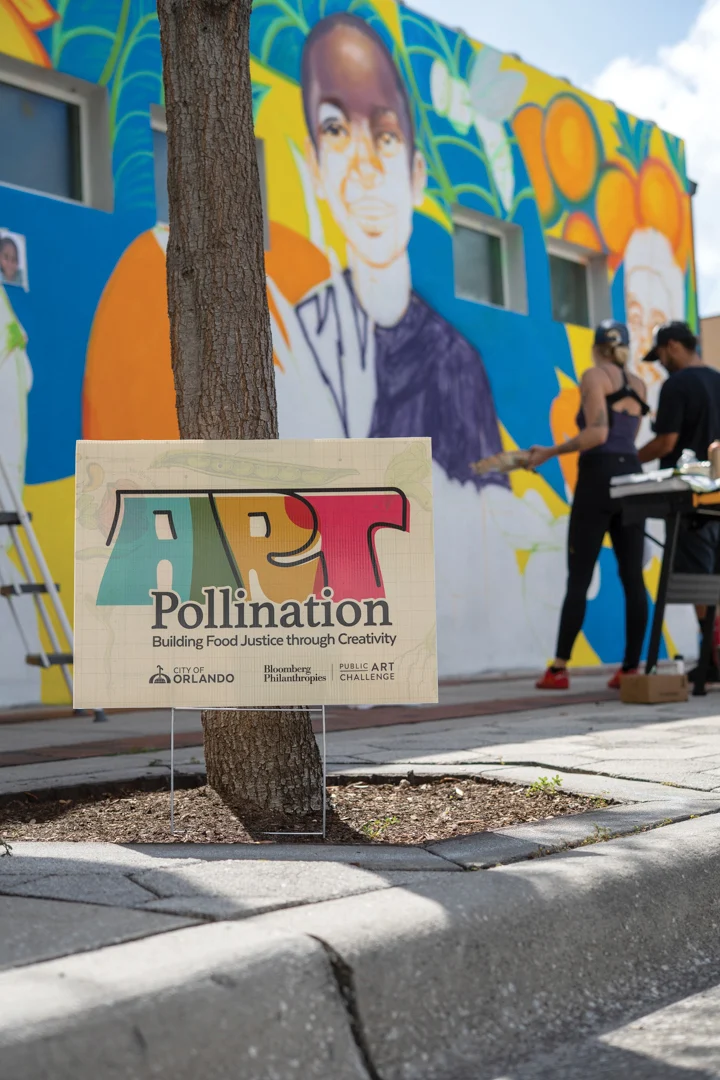
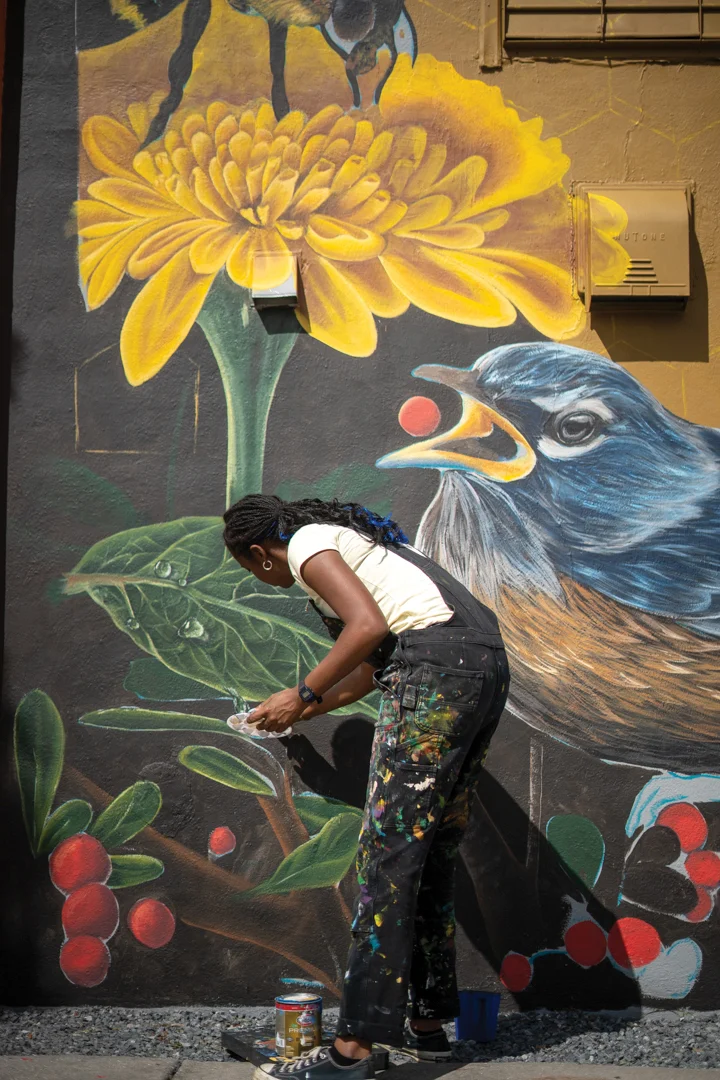

Murals were created and unveiled in early September to kick off a five-month calendar of signature events and art exhibitions for Art Pollination. The 11 works, in the Parramore District, span a six-block radius beginning at the Kia Center and stretching to Lake Lorna Doone. | Courtesy Cityarts
A community garden has been planted on Church Street and trail boards that trace the history of agriculture in Central Florida with spoken-word narratives—accessible by QR code—have been installed along Gertrude’s Walk (between West Amelia and Concord streets).
Several events, including community gatherings and workshops, have taught attendees how to grow their own food, prepare meals and adopt healthier eating habits. Other exhibitions and events are planned.
Coming up in November are two Art Pollination: Local Artists exhibitions, which will run from November 7 to January 26, 2026, at the Terrace Gallery, Orlando City Hall; and from November 20 to December 14 at CityArts.
Choreographer Johnson and fashion designer Korina Emmerich led a hands-on community quilt-making activity for an installation that represents various constituencies working together to address important issues.
The quilt will be unveiled at Art Pollination’s main event on Saturday, December 6, at Lake Lorna Doone Park. The celebration will also feature public art, dance performances, live music, poetry readings, art pollination planting and giveaways.
“Orlando talks about being future ready. I think art is part of that future,” says Fitzgerald. “Art is vital to who we are, connecting and feeding us. And that food access can be part of a creative dialogue for solutions.”
Visit orlando.gov/artpollination for more information. Also, explore more about Art Pollination with the digital guide on Bloomberg Connects, the free arts and culture app, which can be downloaded by scanning the QR code below.

Explore Art Pollination with the digital guide on Bloomberg Connects.